![[FISH]rx Logo in Black](https://fish-rx.com/wp-content/uploads/2025/07/FRXLOGO-BLK.png)
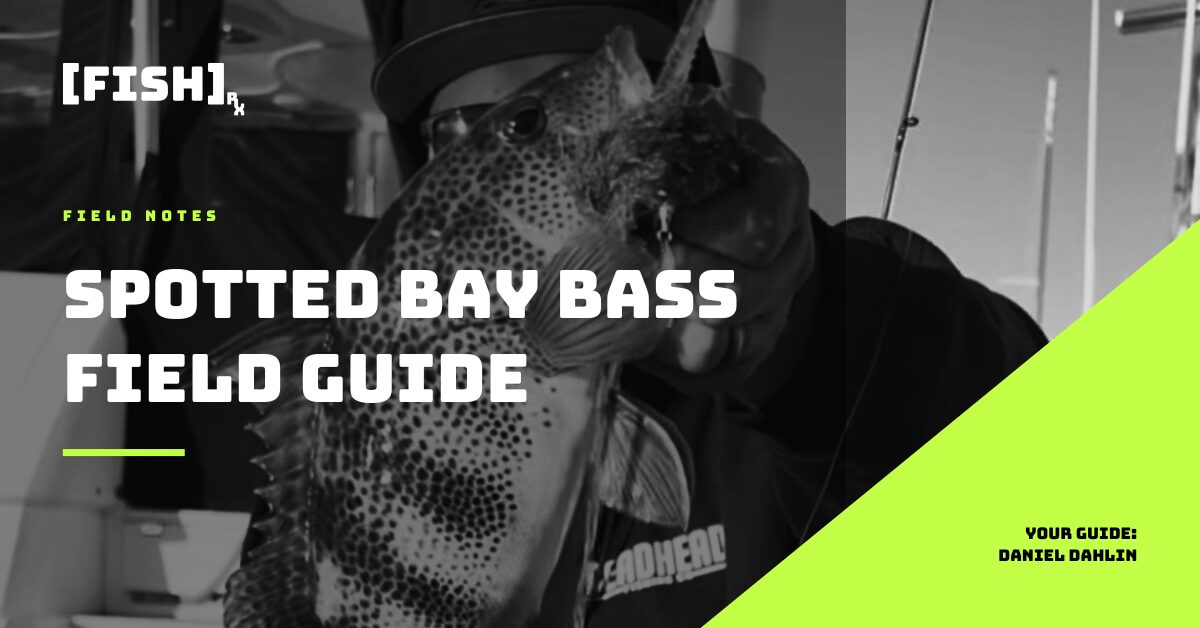
Spotted bay bass don’t get the press that calico does. That’s fine. The anglers who target them seriously know what they’re working with … a species that holds in tight structure, responds well to finesse presentations, and gets genuinely big in the right water. A 15-inch spotty is a real fish. A full bag of them in a back bay tournament is a real accomplishment.
This guide is built around SoCal’s back bay fishery specifically. Newport, Huntington, Marina del Rey, the harbor structure throughout LA and San Diego. If you’re fishing open coast for spotties, some of this applies. But the back bay game has its own rules.
Why spotted bay bass fight the way they do
Spotted bay bass are pound for pound one of the hardest fighting fish in our fishery. They don’t grow fast … a fish that’s 14 inches has been in the water for years, and it fights like it knows it. A 20-inch spotty is a legendary catch. Most legal fish run 14 to 17 inches, and they’ll pull hard the whole way in.
Part of what makes them interesting is that they’re both predator and prey. They eat aggressively, but they also have to watch their backs. That’s why they live tight to structure … docks, pilings, rocks, channel edges. Structure gives them cover. About 85% of your bites are going to come on the bottom, near something. That’s not a rule, it’s just how they’re wired.
When they do bite, they commit. You’re not going to feel a subtle tap and wonder if it was a fish. Spotted bay bass will try to rip the rod out of your hands. There are days you’ll think you’re snagged on the bottom and then your line starts moving sideways. That’s a spotty. Get ready.
Marina del Rey is one of the tougher back bay fisheries in LA. If a bait catches fish there, it’ll catch fish anywhere in the harbor system. That’s the standard the [FISH]rx lineup gets tested against.
Start with the bait in the water, not the bait on your rod
Before you make your first cast, look at what’s in the water. If there’s a lot of small baitfish around the docks, rice, the fish are keyed in on small profiles. A 4-inch slug in a natural color like Chovy is going to fit that window a lot better than something bigger and louder.
That doesn’t mean you only throw small. If you’ve covered water with a 4-inch and the bites aren’t coming, size up. Spotted bay bass are opportunistic … sometimes a 6-inch slug gets eaten because it represents a meal worth breaking routine for. Work both ends and let the fish tell you which they want that day.
In my mind, there’s already a lot of small bait in the water. So sometimes those opportunistic feeders will be like, oh cool, that’s a big enough meal for a week.
The drop shot is your baseline presentation
If you’re new to back bay spotted bay bass fishing and you want one setup to start with, it’s a drop shot. 4-inch RX Slug, nose-hooked or on a 2/0 EWG, 1/2-ounce drop shot weight, leader roughly 6 inches off the bottom. That’s the starting point for dock edges and structure throughout the back bays. If you’re a fan of the Texas rig, the whole RX bait lineup is effective – slow and on the bottom, most times you cant beat that formula.
Hook setup matters more than most people think
Quick tip for fishing the drop shot is to feed the tag end of your main line back through the eye of the hook after tying. That keeps the hook riding straight up and down instead of flopping down … which means cleaner bait presentation and better action.
The same hook logic applies to the paddle tail — if you want the full rigging breakdown, the paddle tail rigging guide covers weights, heads, and hook fit across all three sizes.
Weight by condition, not by habit
When there’s minimal current, go as light as a quarter-ounce. You want the bait to move naturally and stay in the zone. In heavier current, half-ounce is usually the right call for dock fishing … heavy enough to stay near the bottom without pulling the bait off structure. Going to 3/4-ounce is usually too much unless you’re fishing deeper open water or fighting a strong rip.
How to fish docks and marina structure
Spotted bay bass in the back bays live around docks, pilings, floats, and the edges where concrete meets water. The fish aren’t randomly distributed … they’re stacked in specific slips and on specific corners. Your job is to work through efficiently and find where they’re holding that day.
Angles and current are the two things to get right
Cast past the structure you’re targeting and bring the bait along the edge, not straight at it. When current is running, use it. Cast above the spot so the drift carries your bait into position … you’ll get a more natural presentation and the bait will spend more time in the zone without you fighting the water. If the current is sweeping your bait under a dock or boat, that’s actually a good thing. Let it go. Spotted bay bass sit in the shade and ambush from underneath.
Work structure methodically. The fish might not be where you expect them … sometimes three fish come out of one corner and the next stretch of dock edge is dead. That’s back bay fishing. If a section doesn’t produce in a few casts, move. If it does produce, note it and come back later.
If you fish a spot and get nothing, that’s information. If you go back to the same spot two hours later expecting different results … that’s just hope. Move until you find fish, then figure out why they’re there.
Color in clear water
The back bays can get very clear, especially in winter and early spring. In clear water with a slow presentation like a drop shot, natural colors outperform reaction colors most of the time. Chovy is a reliable starting point when there’s small baitfish in the water — for the full breakdown on color selection across conditions, the soft plastic colors guide covers it. Lavender shad has shown up well when you’re around docks with mixed light … the subtle color shift seems to trigger fish that have already seen the naturals.
The general rule: the clearer the water and the slower the presentation, the more natural you want to go. Save the bright colors and chartreuse laterals for stained water, faster retrieves, or when the naturals aren’t getting bit.
If the fish are sitting tight to the bottom near structure … pylon bases, channel edges, rocky transitions … a craw profile can be worth throwing alongside the slug. The RX Skeleton Craw on a Jika rig or Texas rig right next to vertical structure has produced well when the bite gets finicky. It gives them a different look without changing your whole approach.
Tournament context: the Spotty Bowl
The Spotty Bowl is one of the few tournaments in SoCal built specifically around spotted bay bass. It runs through the year with monthly events, best six of seven scores counting toward standings. The format rewards consistency more than one big day … which means if you’re fishing it, your goal every session is a full legal bag, not gambling on one spot for a giant.
The minimum on spotted bay can vary by event, so measure everything. A fish you think is borderline sometimes measures out. A fish you don’t measure can’t count.
Ep. 116 of Time on the Water is the full Spotty Bowl recap — the presentations, the adjustments, and how the bag came together.
Key takeaways
- Match your bait size to what’s in the water. When baitfish are small and dense, go 4-inch and natural colors. Size up only when the fish aren’t responding.
- The drop shot is your baseline setup for dock fishing. Get the hook feeding the line back through the eye, set your leader around 6 inches, and adjust weight for current.
- Work structure efficiently. Cover edges methodically, use the current to your advantage, and don’t stay on a dead section hoping it turns on.
Frequently asked questions
What’s the best bait for spotted bay bass in Southern California back bays?
A 4-inch soft plastic slug on a drop shot is the most consistent producer. The RX Slug in Chovy or Lavender Shad covers most back bay conditions. Match the size and color to what’s in the water … natural profiles in clear water, go bigger when the fish aren’t responding to small presentations.
What size hook for drop shotting spotted bay bass?
A 2/0 EWG is a solid all-around choice for a 4-inch slug. Feed the tag end of your main line back through the hook eye after tying so the hook rides straight up and down. Straighten any bend in the shank before rigging … it opens up the gap and improves your hookup ratio on short-striking fish.
How heavy should my drop shot weight be for back bay fishing?
Start at 3/8 to half ounce for most back bay structure situations. Go lighter … down to a quarter ounce … when current is minimal and you want the bait drifting naturally. Half ounce handles most tidal current without pulling the bait off structure. Heavier than that is usually only needed in deep open water or a strong rip.
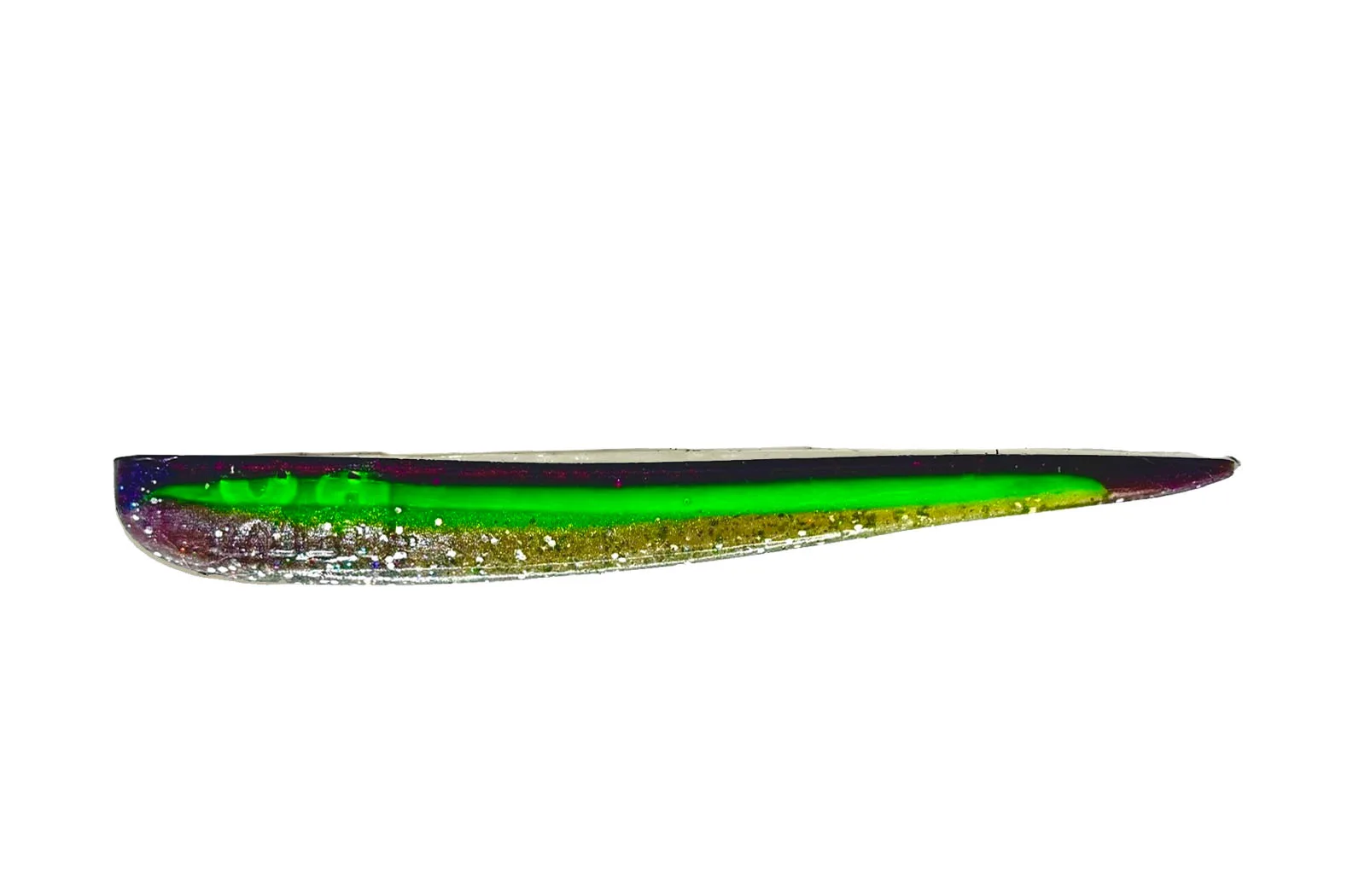
RX Slug
The RX Slug in Chovy and Lavender Shad are available now. Built for this fishery, tested in these back bays.