![[FISH]rx Logo in Black](https://fish-rx.com/wp-content/uploads/2025/07/FRXLOGO-BLK.png)
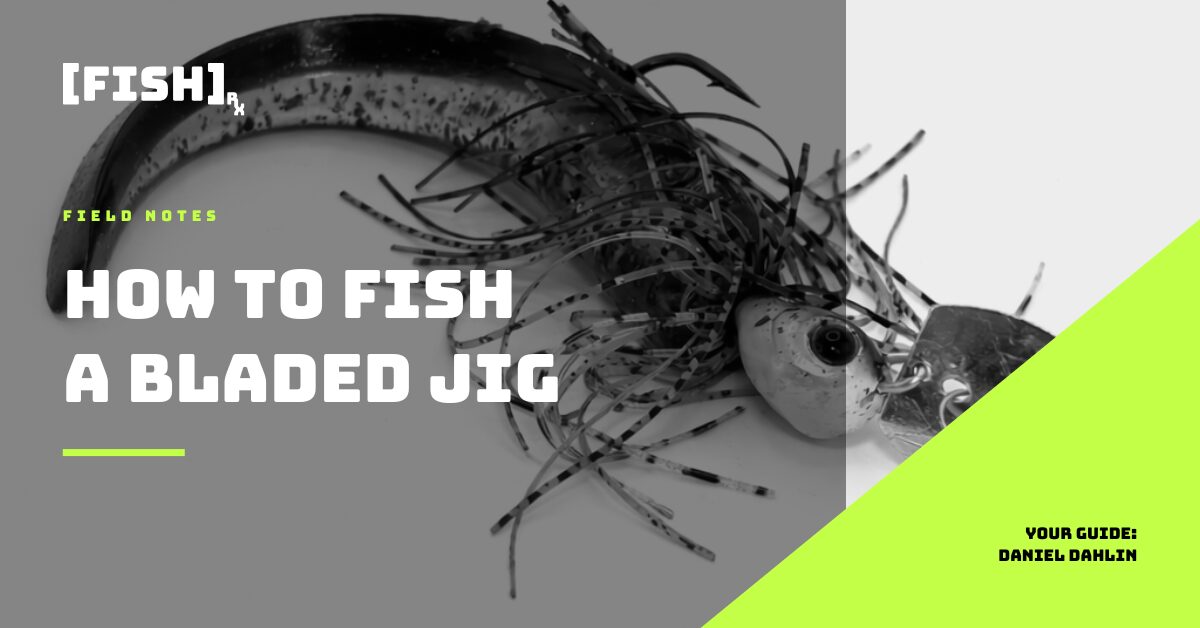
Bladed jig inshore bass fishing in SoCal has more going on than most anglers expect. Pull it out of the package, add a trailer, and chuck it — that works. But fish it right and it becomes something different entirely. It vibrates, moves water, throws flash, makes sounds and can be fished slow, medium, or fast. On paper it should be the only head you need.
The reason it isn’t is that most anglers haven’t put the time in using the bladed jig. Burning it back at a medium pace and hoping for the best is where most anglers stop. That catches fish, but SoCal’s inshore structure — rocks, pylons, breakwalls, channel edges — rewards anglers who can switch it up to cater the different areas.
What makes a bladed jig different
A quick note on terminology: bladed jig, vibrating jig, and chatterbait all describe the same general style of bait. The branded name ChatterBait is trademarked by Z-Man, so you’ll hear both terms used interchangeably in the fishing community. The Cheapskate customer colors for [FISH]rx is a bladed jig built in collaboration with Derek at Deek’s Jigs … same concept with the beloved SoCal-specific colorways designed around the local fishery. The name is straightforward: it’s an affordable way to get into bladed jig fishing without overthinking it.
The colorways on the Cheapskate aren’t just aesthetic. Bladed jigs haven’t been a mainstream technique in saltwater … the style is well established in freshwater, but it’s a select few that throw it in harbors and back bays. The Spottie Special, Magic Mint, and Spotted Bay Bass colorways were built specifically to give local anglers something that looked right for this fishery. The thinking: if the color fits the water, you’re more likely to actually fish it. Fishing the bladed jig, is how you find out it works.
What separates a bladed jig from a swim jig or spinnerbait is the blade geometry. That flat metal blade creates a thump and vibration you can feel through the rod. It’s not subtle. The fish feel it from further away than a soft plastic on a roll head or a drop shot … which is exactly what makes it a search bait. When you’re trying to cover water and locate fish rather than work a known spot, the bladed jig finds them fast.
On paper this should be the only head you need. It makes noise, it vibrates, it moves water, it shimmies, it throws light. It’s like the best of everything from a crankbait and a soft plastic in one.
The two ways to fish it:
straight retrieve — covering water
The baseline technique is a straight retrieve at a pace that keeps the blade activated. You’ll feel the thump when the blade is working … if you can’t feel it, you’re either going too slow or the bait is fouled. The key is to feel that cadence and maintain it. When there’s a lot of baitfish moving and fish are actively feeding across a wide area, burning the bladed jig through likely water is one of the most efficient ways to get bit.
Weight selection matters here. Lighter heads … 3/8-ounce to 1/2-ounce … ride higher in the water column. Heavier heads … 3/4-ounce to 1-ounce … stay lower and are harder to keep off the bottom. At MDR and similar harbors where the fish are often holding close to structure near the bottom, the heavier options keep you in the strike zone without having to slow down so much that you lose the blade action. A 1-ounce Cheapskate fishing a harbor wall was catching fish when lighter options were blowing past the zone.
The pop and pause — working structure
The more technical retrieve, and the one that unlocks the bladed jig on rocky structure and breakwalls, is the pop and pause. Burn the bait up off the bottom in a short burst … almost like a snap of the rod tip … then kill it and let it fall back down. What you’re doing is triggering two different reactions in the same motion: the aggressive upward burst provokes a reaction strike, and the fall gives the trailer time to kick on the way down. This is a great wait to slow the retrieve. You can also use a creature bait trailer with this pop and pause style of fishing. Now you can slow it way down and still get all that vibration.
This is where trailer selection becomes critical. When the bait is falling, you want that trailer moving. A paddle-based tail like the RX Paddle Tail kicks wide on the drop. A craw-based trailer like the RX Dragon Tail has a different shimmy — tighter, more erratic. Which one works better depends on the day and the mood of the fish, but the principle is the same: the drop is an action phase, not dead time. Fish it like it matters.
Weight by current
This is the adjustment most anglers don’t think about until they’ve lost fish by fishing the wrong weight for the conditions.
Normal back bay current: 1/2-ounce is the right call for most dock and structure fishing. Heavy enough to hold near the bottom without pulling the bait off structure. Light enough that you can still feel the bait and detect the subtle pickup that spotted bay bass often give.
Strong current: 1-ounce. At this point you’re fighting the tide to stay near the bottom and the extra weight is earning its place.
Going heavier than half-ounce on a drop shot in a harbor environment is usually unnecessary unless you’re fishing deep open water. Fisherman also say that if the bite is on the bottom why waste your time getting to the bottom, and on that note you can go heavy. That will get you to the bottom faster and keep you on the bottom.
You have this rapid pop up and then this slow fall down. The trailer has to kick on that fall. That shimmy on the way down is part of the action. You’re getting two different bites out of one retrieve.
On rock structure, slowing the retrieve way down turns the blade into a rattle. At that speed the blade isn’t generating full vibration … it’s ticking off rocks as you drag it through. Ting ting ting. That clicking contact with the bottom is its own trigger, especially for calico bass that are sitting tight to the rocks and keying on sound.
Trailer selection
The trailer you put on a bladed jig changes how it fishes more than most people realize. It affects how the bait falls, how much water it moves, and what it looks like on the drop. A few guidelines from time on the water:
- RX Slug — a slim, straight trailer that gives the bait a tighter, more subdued profile. Good when fish are pressured or the water is very clear and you want a more natural look. The subtle shimmy on the fall doesn’t overpower the blade’s vibration.
- The Dragon Tail — designed specifically with the bladed jig in mind. The sculpted tail kicks hard without overwhelming the head … amplifies the blade’s vibration rather than fighting it. Best for the fling-and-fall technique where the drop is a key part of the retrieve.
- RX Paddle Tail — a wider kick, more water displacement. Works well on faster retrieves when you want maximum movement. Tends to ride higher than the Dragon Tail at the same retrieve speed.
General rule: if you’re burning it fast and covering open water, go paddle tail or Dragon Tail. If you’re fishing it slow on structure or doing the pop-and-pause, match trailer choice to how you want the drop to look.
When to throw the bladed jig vs. other presentations
The bladed jig earns its spot in the rotation when fish are active and spread out. If there’s visible bait moving, fish are chasing, or the tide is running hard through structure, the bladed jig finds fish faster than a finesse presentation. It’s a reaction bait … it triggers aggression, not hunger.
When the bite is slow, the water is very clear, or fish have been pressured, drop back to a finesse presentation. A slug on a drop shot or a Skeleton Craw near structure will often out-fish a bladed jig in those conditions. The two approaches aren’t competing … they cover different situations.
Ep. 116 of Time on the Water is the dedicated bladed jig episode — slow-roll vs. kill-and-drop, trailer selection, and the full Spotty Bowl setup. Ep. 117 covers the 1oz bladed jig at the wall — why heavier heads stay in the strike zone in deeper harbor water.
Key takeaways
- The bladed jig is a search bait first. Use it to cover water and find active fish, then switch to finesse when you’ve located them or the conditions call for it.
- Fish the pop-and-pause on structure. The drop is an action phase — your trailer should be kicking on the way down. Match your trailer to how you want that fall to look.
- Go heavier than you think on weight near the bottom. A 3/4-ounce to 1-ounce head keeps you in the strike zone at MDR and similar rocky harbors without killing the blade action.
Frequently asked questions
What’s the difference between a bladed jig and a chatterbait?
They’re the same style of bait. ChatterBait is a trademarked brand name owned by Z-Man — the same way Jet Ski is a brand name for a personal watercraft. Bladed jig or vibrating jig is the generic term. The Cheapskate from [FISH]rx is a bladed jig with colorways built specifically for SoCal’s inshore fishery.
Can you fish a bladed jig in saltwater?
Yes, and it’s increasingly common in SoCal’s back bays and harbors. Spotted bay bass, calico, and sand bass all eat them. The technique is essentially the same as freshwater — the main adjustment is going heavier on the weight to stay in the strike zone against tidal current, and being aware of corrosion on the hardware after saltwater use.
What trailer should I put on a bladed jig for SoCal inshore bass?
The RX Dragon Tail is built for it — the tail geometry amplifies blade vibration and kicks well on the fall. For clear water or pressured fish, the RX Slug gives you a slimmer, more natural profile. The RX Paddle Tail works well at faster retrieve speeds when you want maximum water displacement. Experiment with all three and let the fish tell you what they want that day.
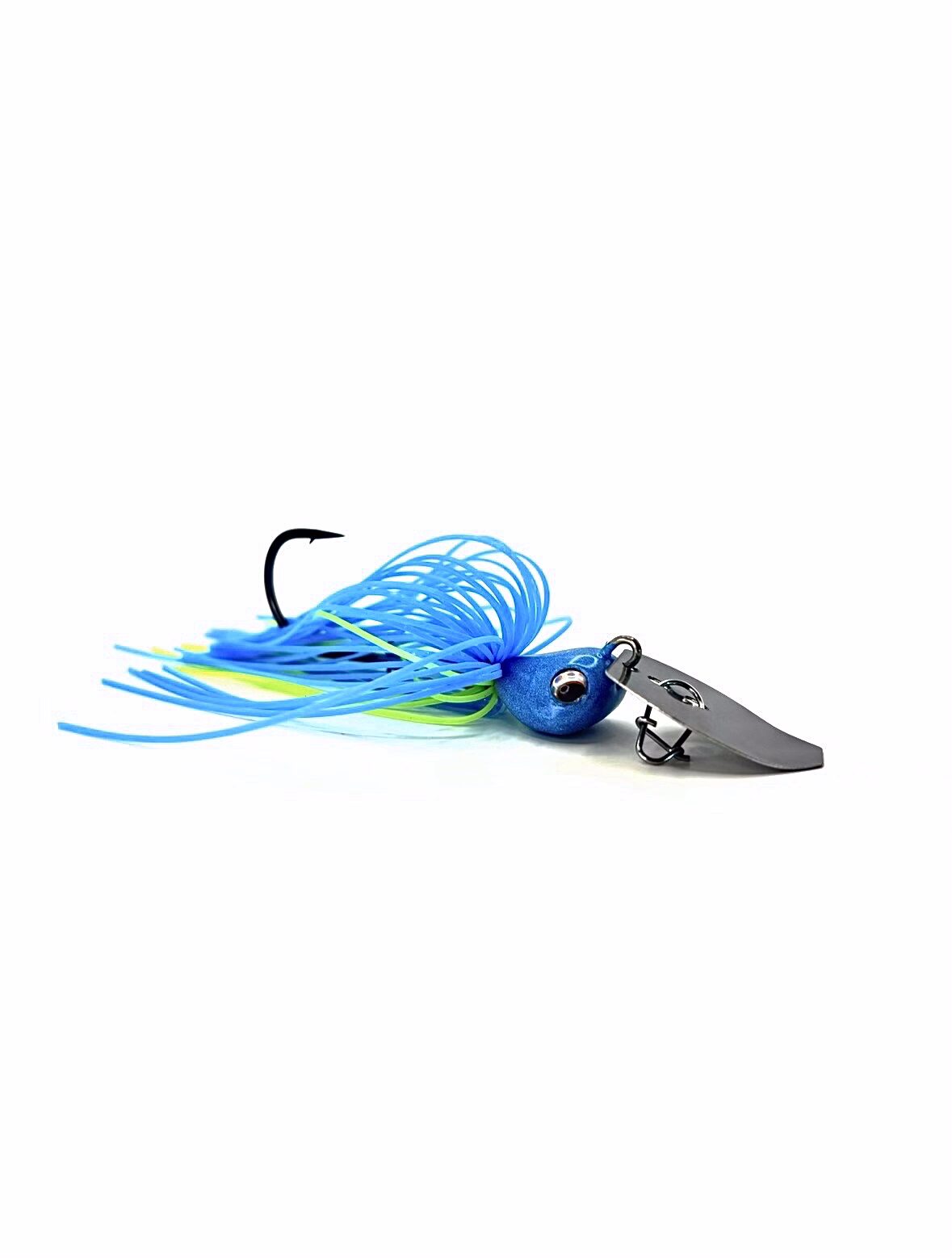
Cheapskate
The Cheapskate bladed jig comes in SoCal-specific colorways designed around this fishery. Pairs with the RX Dragon Tail, Slug, or Paddle Tail depending on how you want to fish it.