![[FISH]rx Logo in Black](https://fish-rx.com/wp-content/uploads/2025/07/FRXLOGO-BLK.png)
You pull up to a spot, and before you tie anything on, you’re looking at the water. Bait balled up tight against the pilings tells you one thing. Nothing visible tells you something else, but not what most people assume. Match the hatch starts here, and it has less to do with identifying a species than most anglers think.
Every harbor holds fish. That’s not really in question. The question is whether they’re eating, and that’s what changes fishing from catching.
What’s Actually Happening in the Water Before You Tie Anything On?
If you see bait, that’s usually a good sign. Fish key in on it as a dinner bell. But too much of a good thing flips the logic. When bait is that dense, fish don’t have to reserve their aggression for a narrow feeding window. They can eat whenever they want, which makes them slower to commit to any one presentation.
Agitated bait is a different signal entirely. If it’s rising, jumping, or causing a disturbance on the surface, something is actively feeding on it. Cast into that disturbance immediately. It’s one of the more reliable “something is happening right now” cues in SoCal inshore fishing.
Depth matters too. Bait hovering tight to structure and not moving much tells you to get down and slow. A drop shot six inches off the bottom, or a Texas-rigged bait crawled along the rocks, matches that behavior. Bait suspended higher in the water column calls for something swimming through that same zone instead of hugging bottom.
None of this requires knowing the species. It requires watching before you decide.
Which [FISH]rx Color Actually Matches What’s Swimming?
You don’t need to identify anchovy versus smelt versus sardine on sight to fish smart. You need to recognize the broad category, and SoCal really only has two that matter for color selection: fin bait and crustacean.
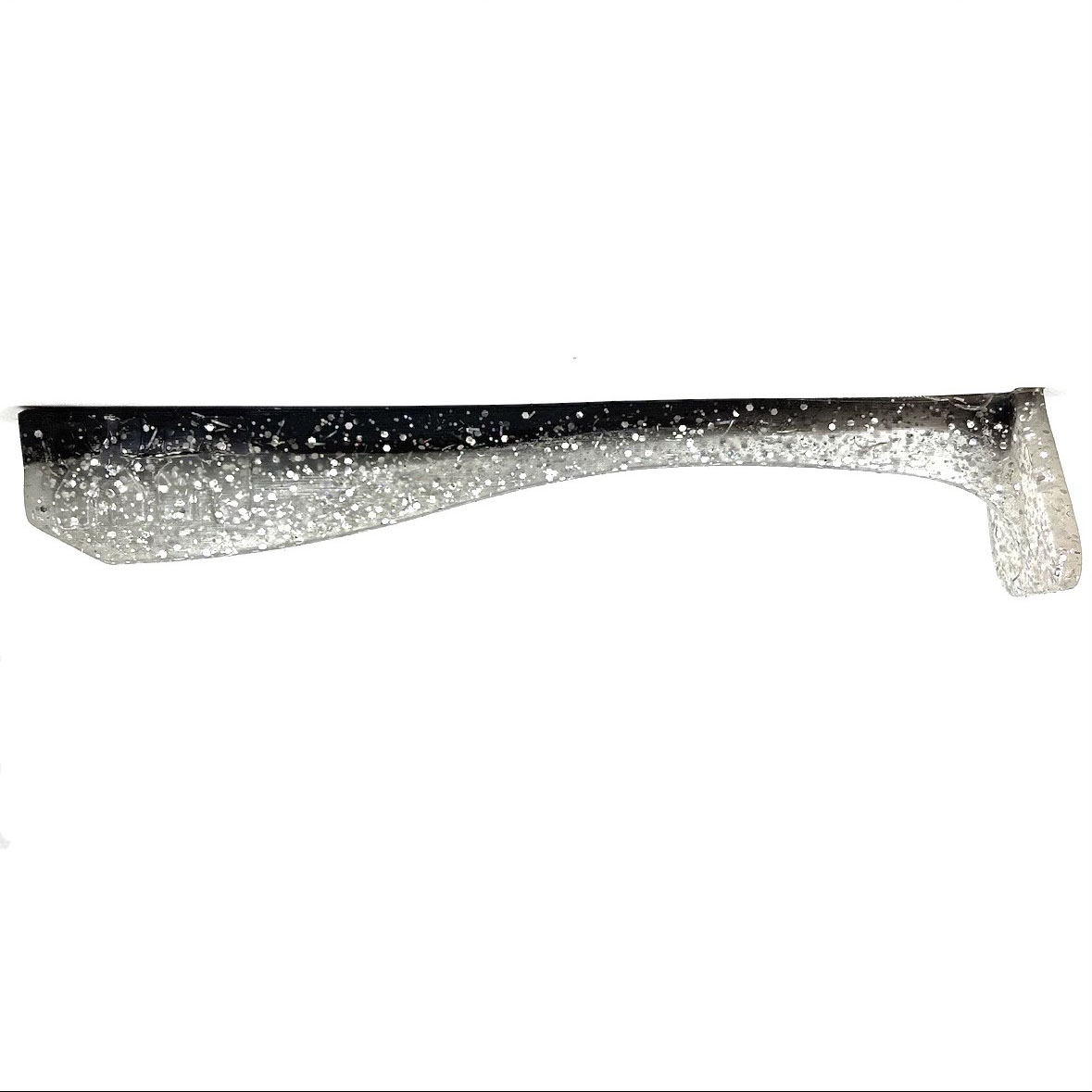
Anchovy shows up as a black back over a silver or white belly, generally in the 3 to 4 inch range, though that’s a starting point and not a rule. Chovie 2.0 on the RX Slug is built around exactly that profile: black back, white belly, teal flake, and a blue shimmer. Cosmic Shad, also a Slug color, covers the same dark-back-light-belly family and heavy glitter. Either one reads as “generic baitfish” to a bass that’s locked onto anchovy.
Smelt and jack smelt run greener, with a gold lateral line and a lighter, almost transparent belly. Glacier Mint was built for that exact read. If the bait you’re watching looks more green than black, that’s your cue to switch away from the anchovy colors.
Crustacean is the one anglers skip. Spotted bay bass shift toward crabs, clams, and ghost shrimp as water cools and their metabolism slows for the season, and a baitfish-profile bait can go untouched during that window no matter how well it matches the fin bait around it. The RX Skeleton Craw, crawled slowly along the bottom, covers that presentation. It’s not an exact ghost shrimp replica, but the slow, bottom-hugging action reads the same way to a feeding fish.
It’s whether or not they’re eating. That’s what changes fishing from catching.
For the full color and water-clarity framework beyond bait matching, the soft plastic colors guide covers what to throw in clear versus stained water, and the Back Bay field guide goes deeper on why spotted bay bass key on crustaceans in the first place.
When Should You Stop Trying to Match the Hatch?
Sometimes the fish don’t want a match. They want a meal.
A smaller fish burns through energy faster and gets more feeding windows in a day. A bigger, more established fish might only eat once, maybe twice. That changes what it’s looking for. Instead of chasing something proportional to the bait around it, a big fish holding out for its one meal of the day may want something worth the effort. Daniel calls it elephants eat peanuts: a big fish will absolutely eat something small, but when it’s looking for the meal that holds it over, it wants size.
That logic played out directly in November and December of 2025. Daniel noticed 5 to 6 inch bait suspended and slow-cruising through the bay in schools, roughly the same size as a 6″ RX Slug. He tied one on and started catching immediately, not because it matched a small profile, but because it matched what the fish were actually keyed on that day: a bigger meal, not a natural-sized one.
That’s still match the hatch. It’s just matching the size the fish are actually looking at, which isn’t always the smallest thing in the water.
There’s also a version of this where matching stops mattering at all. In Ep. 75, Caesar Chavez described a session where bait was so dense it was landing in the boat, and he put together 30 fish in about an hour. In that kind of feeding frenzy, the smallest detail can matter more than color, or nothing matters at all because everything’s getting eaten.
One fish on a bait is luck. Two is worth noting. Three fish on the same setup means the fish are actually honing in on it.
If you’ve been fishing a spot for an hour without a bite, don’t keep grinding the same presentation. Change something: location, depth, retrieve speed. You can always go too fast. You can never go slow enough.
I’ll be honest about the limits here. I don’t track a season-by-season baitfish calendar for all of SoCal, and I wouldn’t pretend to. What I know is Marina del Rey, and even there, my read is built from watching, not from a script. That’s the real skill behind match the hatch: less about knowing every species, more about paying attention to what’s actually happening and being willing to change your answer.
Shop the Full Catalog
Every color mentioned here, Chovie 2.0, Cosmic Shad, Glacier Mint, and the crustacean-profile options, comes down to reading what’s in front of you first and picking the bait second. The full [FISH]rx soft plastic lineup covers both ends of that decision, fin bait and crustacean alike.