![[FISH]rx Logo in Black](https://fish-rx.com/wp-content/uploads/2025/07/FRXLOGO-BLK.png)
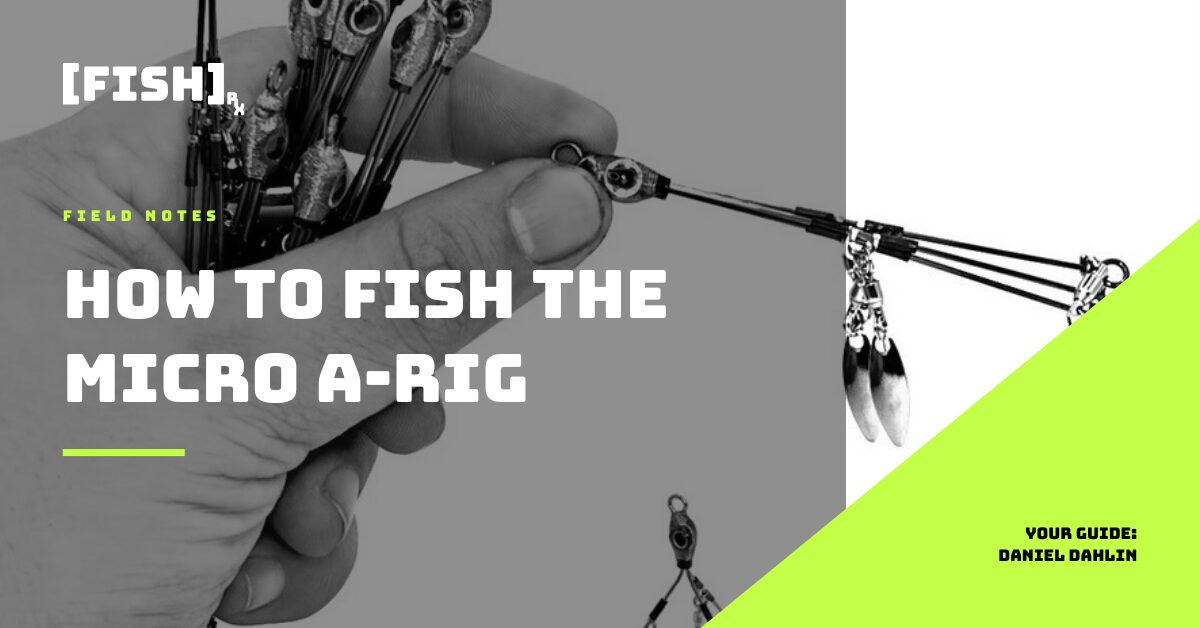
You’re standing on the dock with a box full of soft plastics that haven’t drawn a bite, and there’s a multi-bait rig sitting in your bag you’ve never tied on. The A-rig and C-rig are two of the highest-percentage ways to show SoCal bass something that looks like an easy meal when nothing else is working, and the choice between the two comes down to the water in front of you, not how confident you feel tying one on. I run both. The full 5-arm A-rig for open water, the 3-arm C-rig, my MDR C-Rig, when I need to get into pockets the bigger rig can’t reach.
Most anglers know the multi-bait rig concept from freshwater bass fishing and never think to bring it inshore. That’s a mistake. A single soft plastic looks like one meal. A cluster of arms moving through the water looks like a bait fish ball, and a bait fish ball pulls harder on a fish than almost anything else you can throw.
What the A-Rig and C-Rig Actually Do
Why Bass Eat It When Nothing Else Is Working
Anglers talk about draw power. How much does the bait pull a fish’s attention, and how far will that fish swim to eat it or even just look at it. A single bait has decent draw power. A cluster of baits that reads as a bait fish ball has a lot more. If a fish is hungry, or looking for the one meal worth the effort, a bait ball is exactly that opportunity.
It’s too good to be true, which it’s not. It is not true.
That’s basically how I describe it. The A-rig and C-rig trigger a reactionary bite. Fish see that many baitfish move past them at once and they get aggressive about it, the same way they would on a real school passing through. It’s an opportunistic bite, not a finesse bite, and it works on stubborn fish that won’t touch a slow, subtle presentation.
I’ve caught calico, sand bass, spotted bay bass, sculpin, and halibut on it. It transcends species. It just depends on where you put the bait and whether a fish is sitting there.
Search Bait, Not Just a Tournament Tool
The A-rig is a search bait in SoCal inshore the same way it is in freshwater, but it does something extra here. It blows finesse out of the water. Even when fish aren’t actively feeding, the A-rig draws bites that a finesse presentation won’t because it looks like too good of an opportunity to pass up.
I always have one tied on in a tournament setting. Recreationally, I fish it less, mostly because I’m fishing a dozen other things, but it’s one of the most reliable ways I know to get a stubborn fish to commit.
The clearest example I’ve got is from a Spotty Bowl session where nothing in my box was working. I wasn’t in love with anything, so I fished everything, and the C-rig landed five of my ten spotties that day. That was the right call.
How to Rig Slugs and Paddle Tails on the Arms
This is a cast-and-retrieve rig, and how you build it changes with the water you’re fishing. I run smaller heads and smaller baits most of the time, simply because throwing a fully rigged 5-arm setup all day will wear out your shoulder if you load it heavy.
How Big Should the Arms Be?
For most MDR and back bay situations, I’m running 1/8 oz or 1/4 oz lead heads with 3.5-inch RX Paddle Tails. I’ll also run 4-inch RX Slugs on the arms when I want a slug-style profile instead, especially when I’m working it with the same short jerks you’d use on a jerkbait. That pulsates the baits in a way a straight retrieve doesn’t. The 4-inch is the same size I’d run on a drop shot, and the full breakdown on how a slug fishes across different setups is in the slug rigging guide.
On bigger water, like the Long Beach breakwall, I’ll size up to 5.5-inch paddle tails or even 6-inch slugs. That’s water where a bigger profile makes sense and the fish can handle the extra size.
I keep all the arms the same size most of the time. That’s a personal preference, not a rule. Some anglers will upsize one arm, usually the last one in the lineup, to give it a slightly different profile, on the theory that odd one out gets bit first. I haven’t seen that pan out for me personally, but I’ve watched other people do it and catch fish doing it. Play it out and see what your water tells you.
How I Actually Rig It
Each arm connects to a snap swivel, so you’re not nose-hooking a bait the way you would on a standard soft plastic setup. Most of the time I’m running RX Belly Weights, lead heads or a swing head up front, and connecting the rig itself to the split ring. That keeps the weight forward and lets you fish the whole thing weedless if you want to.
For the slugs specifically, a flashy swimmer from Owner keeps things fairly weedless too, and I’ll run lead heads with slugs the same way, cast and retrieve. Around docks I like to jerk the slugs slow and let them hang. You can get creative here. Put a lead head up front on the swing head, tie the rig off the split ring, and you’ve got the weight up front with a weedless multi-bait presentation behind it. I run Blacktail Fishing EWG hooks across these setups.
What Color Do I Run on the Arms?
I run all the arms in the same color most of the time. It just looks cleaner to me, and matching the hatch across the whole rig keeps the presentation tight. That’s not a hard rule either. I’ve watched a buddy throw a different head and color on every arm and still get bit. It looks a little messy, but fish don’t seem to care as much as we do.
How Much Weight for Which Water?
This is where the water actually changes my setup. In the back bay, shallow and tight, I’m running 1/8 oz or 1/4 oz almost exclusively, because I want to fish it slow and keep it just above the structure without winding too fast. At the Long Beach breakwall, where the water’s deeper and rougher, I’ve thrown a full 1 oz setup and caught a fish on it before losing the rig to the rocks, which is part of fishing the wall.
Around pylons and dock structure, the C-rig gets the nod because it’s lighter and easier to flip and pitch into smaller spots than the full A-rig. That’s a different kind of fishing than open-water cast and retrieve, and it’s worth reading the urban structure guide if you haven’t dialed in how to work that kind of water yet.
Freshwater or Saltwater? Here’s What Actually Changes
This comes up because California limits freshwater anglers to 3 hooks on one line, while in ocean and bay waters there’s no hook count limit at all outside a few specific exceptions, none of which apply to a SoCal harbor angler running an A-rig for bass. I fish almost entirely saltwater, so I don’t have to think about it.
If you’re running the A-rig in both saltwater and a freshwater, the move is to run larger blades on the top arms in place of two soft plastic baits. That eliminates two hooks while keeping the vibration and flash, and gives you three baits to fish on the bottom that stay freshwater compliant. Always check the current California sport fishing regulations before you rig up somewhere new.
A-Rig or C-Rig: Which One for This Water
Once you’ve got it rigged, the question is which one to tie on. If I’m fishing open water without much structure to deal with, I’ll go with the full 5-arm A-rig. More blades, more baits, more presence, louder in the water column. Around docks I want the C-rig, because I can get it into smaller pockets and holes the bigger rig can’t reach, and I can fish it on lighter gear without throwing out my arm.
The C-rig started as a finesse version of the A-rig, but I don’t think of it as more practical so much as a different presentation entirely. It lets me put that same shock-and-awe bait fish ball look into places that haven’t seen it before, which is exactly what gets bites. Lately I’ve had just as much success on the C-rig as the full A-rig, even though the 5-arm probably still has a slight edge on pure pulling power.
Working It
Most of the time I’m casting and retrieving with a steady cadence. If I want to fish it faster, I’ll go to a heavier head and keep it tight to the bottom near the structure, the docks, the pylons. If I want to slow down, I’ll drop to a lighter head, usually 1/8 oz or 1/4 oz, and try to stay just above the structure without winding too fast.
There’s no single cadence that works every time. Some days burning it back gets bit. Some days it’s pop, wind, pause. Let the fish tell you what they want instead of deciding ahead of time.
One thing that shows up a lot in my footage is fish eating the rig on the fall, not the retrieve. That’s the same pull that makes the whole rig work in the first place. It looks like a bait fish ball sinking through the water column, and that’s an easy meal a fish doesn’t want to pass up.
What It’s Going to Cost You
Most anglers are scared to throw the A-rig, and I get why. It’s an intimidating, expensive setup, and losing one hurts.
You have to fish it and lose it before you get good at it.
You can’t fish it gingerly and expect results. You can get lucky here and there, but for the most part you have to be aggressive with it before the bites start coming.
When I Put It Away
If I’m not getting bit on a cast and retrieve, I’ll typically put the rig away. That usually means the fish aren’t eating moving bait right then. They might want something slower on the bottom, or a crustacean-style presentation instead. It’s not a failure of the rig. It’s information about what the fish want that day.
If I’m not getting bit on a cast and retrieve, I put it away.
That’s the A-rig and C-rig. Tie one on, lose a few, and let the water tell you which one earns its place that day.
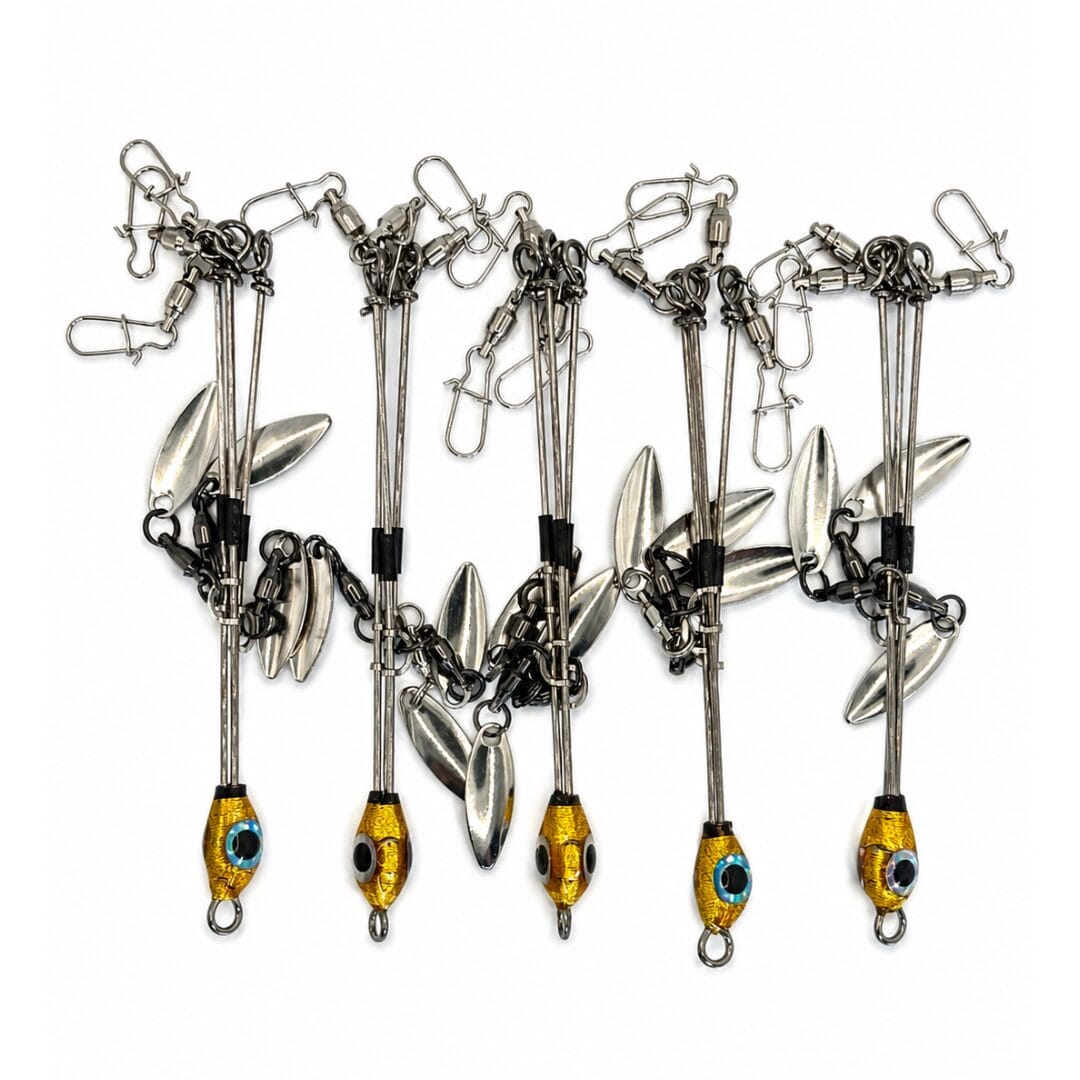
MDR C-Rig and RX Slug
The MDR C-Rig is the rig I reach for most around MDR’s dock structure, and the 4-inch RX Slug is the bait I’m running on it more often than not. Both are built for exactly the water this guide covers.