![[FISH]rx Logo in Black](https://fish-rx.com/wp-content/uploads/2025/07/FRXLOGO-BLK.png)
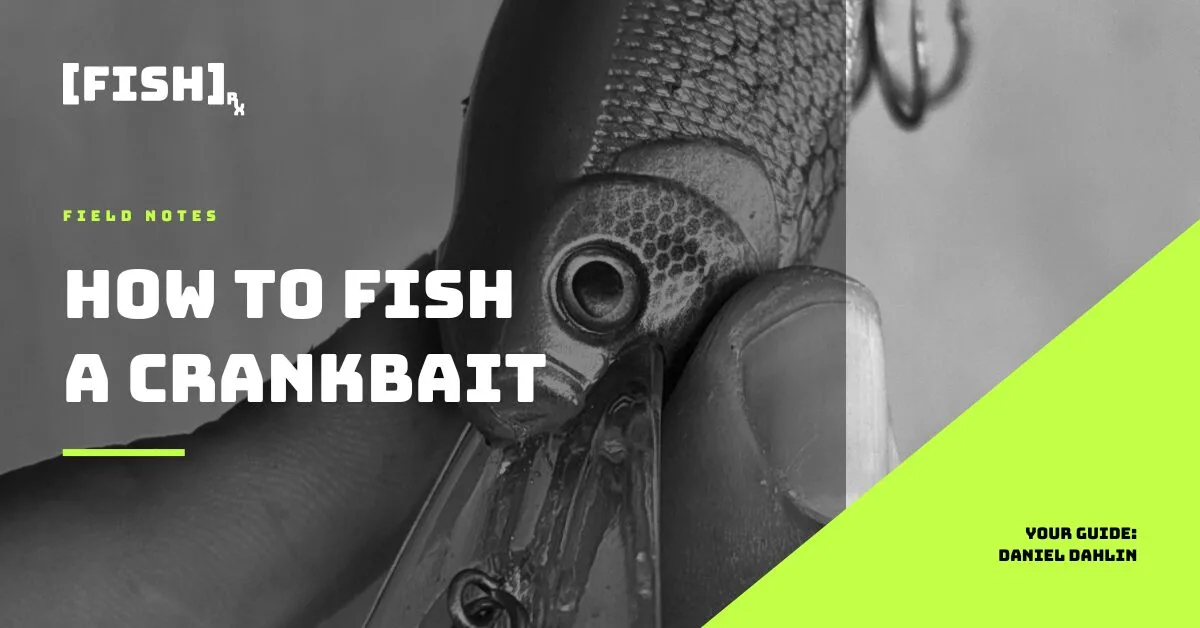
Most SoCal inshore anglers reach for a soft plastic by default. The crankbait consistently produces Calico Bass, Sand Bass, and Spotted Bay Bass in a way that finesse presentations can’t match. The deflection off an irregular rocky surface, the bottom contact, the tight wobble in current. That is not an action you get in just any artificial lure.
It’s also the bait that almost ripped the rod out of your hand on a tournament day. That’s crankbait fishing on SoCal inshore structure. When it connects, it connects hard.
The one non-negotiable: bottom contact
Every harbor crankbait fish in SoCal inshore comes from bottom contact. That doesn’t mean you can’t catch a bass off the bottom, but driving it down to the rocks or the bottom and keeping it there is going to lead to more fish.
The technique: cast past your target, drive the rod tip down to get the bait diving quickly, and work it back with the rod tip low and the bait grinding along the bottom. When it deflects off a rock, that irregular action is exactly what triggers the bite. A crankbait that swims is far less effective than one that’s ticking, deflecting, and occasionally hanging up on the structure you’re fishing.
All my fish have come from keeping the crankbait on the bottom. I drive it down on every single cast regardless of where I’m throwing. If you’re not hitting the bottom, you’re not fishing it effectively.
Rod, line, and gear setup
Line choice affects how deep your crankbait actually runs, and in saltwater the difference is more pronounced than most anglers expect. Fluorocarbon sinks and has the least buoyancy of your three options: braid is the most buoyant, mono sits in the middle, and fluorocarbon sinks the fastest.
Serious crankbait fishermen spool straight fluorocarbon because it lets the bait run at its true depth rating without any counter-buoyancy pulling against the bill. Throw the same bait on braid and it runs shallower. Saltwater compounds this further because the added density of salt water already costs you depth compared to fresh water. A crankbait rated to 10 feet in fresh water may not reach the bottom in 8 feet of salt water on the wrong line.
15 lb AFTCO fluorocarbon is the setup for shore fishing SoCal harbors. Going lighter is difficult when you’re pulling fish toward structure and lifting them up and over a railing. 15 lb is the floor, not a suggestion. Run a slightly longer leader than you might expect. Borrowing from offshore pelagic fishing, a rod length or two of fluorocarbon helps hide the line from the fish and gets the bait down faster on the initial dive. Most of this fishing is pitching and flipping around docks, not Hail Mary casts, so the longer leader stays out of the equation on the retrieve.
Rod action matters on the hookset. A medium heavy, fast action parabolic rod loads up when a fish hits and lets the crankbait stop in the fish’s mouth long enough for the hooks to drive in. Too stiff and the bait keeps moving on the strike, the fish opens its mouth, and the hooks never catch. If you’re missing fish on solid bites, the rod is the first thing to look at.
One more adjustment worth knowing: saltwater buoyancy means you can compensate by going slightly heavier on your hooks. The same principle applies as in jerkbait fishing. Heavier hooks weight the bait down and help it reach its rated depth. Go lighter on the hooks if you want the bait to run shallower. It’s a small adjustment but it gives you more range from a single bait.
SoCal saltwater tuning
If your crankbait is running to one side or the other instead of tracking straight, the line tie is canted. Take pliers, clamp down gently on the eye, and twist it in the opposite direction of the way the bait is running. Small adjustment, test it in the water, repeat until it tracks straight. This can also be worked in reverse if you wanted a crankbait to run left or right to help stick to structure.
Hook condition matters more in the saltwater scene. SoCal has tough fish that dull hook points and bend hardware. Saltwater will ruin a bait’s hardware fast. Check your points regularly. A dull hook means a missed fish even when the bite is solid.
It’s easy to adjust the crankbait to a shallower depth than it is to go deeper. When purchasing a crankbait, look for a 12-foot-plus diver.
Cold water changes the retrieve
Water temperature is one of the few things that should change how you fish a crankbait. In cold water, burn it. Get the bait to depth and pull it past the fish fast. You’re going for a reaction bite, not a feeding bite. Slow-rolling a crankbait in cold water tends to give the fish too much time to look it over and pass.
As the water warms and fish get more active, that urgency matters less. A lot of anglers shift toward a slower-rolled glide bait as the alternate presentation once spring and summer activity picks up, rather than slowing the crankbait itself down. The crankbait stays a fast, reaction-driven bait year-round. What changes with the season is whether you reach for it first or fall back on a slower presentation once the water’s warm and the fish are willing to chase.
Episode 96 with Jon Kay of JK Baits gets into crankbait setup and technique in more depth, including how he thinks about retrieve speed and presentation.
Rocky bottoms, breakwalls, and kelp fields
This is the primary crankbait environment in SoCal inshore: the outer wall of a harbor, rocky bottoms of the back bay, and any vegetation. These bass hold up near structure, so that’s always a solid place to start. The goal is to run the crankbait as close to the wall as possible, keeping it in contact with or near the rock face, right above eel grass just touching the tops, and banging against a rocky bottom. If you aren’t breaking bills, you aren’t fishing a crankbait effectively.
From a kayak with a trolling motor, it’s straightforward. Set the motor to a slow cruising speed and run parallel to the wall at a distance where your bait is tracking right alongside the rocks. The deflections happen naturally. Without a motor, make your casts count and keep it tight to whatever structure you are fishing. It’s not often that you will pull a Sand Bass or Spotted Bay Bass far from structure.
When the crankbait earns its spot
The crankbait is a search bait. When I’m covering water and looking for a hungry bass, it’s the first thing I reach for. It covers ground fast, stays in the strike zone, and produces a reaction bite that finesse presentations can’t replicate. The key is letting the fish tell you what they want. Vary the retrieve speed, change the depth, change the color if 45 minutes isn’t producing. The crankbait works on most days. On the days it doesn’t, set it down and come back to it. It’ll earn its spot again.
One thing worth keeping in mind: the big fish are big for a reason. They’re not competing with the small fish for fast reaction bites. What I’ve been focused on lately is how to make a fast bait go slow. Those bigger fish want a presentation that doesn’t require them to exert themselves. A meal coming by their face slowly is what they’re looking for. The crankbait can do that too. It’s not just a burn bait.
For more on crankbait setup, technique, and what it looks like from the perspective of the guy who made the JKB LC 3.5DD, Time on the Water Episode 96 with Jon Kay of JK Baits is worth a listen.
Key takeaways
- Bottom contact on every cast — no exceptions. Drive the bait down, keep it there, and let the deflections off rocky structure do the work.
- Line matters more than most anglers expect. Fluorocarbon gets your bait to its rated depth. Braid fights it the whole way down.
- Tune your bait before you fish it seriously. A crankbait that tracks sideways isn’t catching fish. Thirty seconds with pliers fixes most tracking problems.
- Cold water means burn it. Don’t slow-roll a crankbait when temperatures drop — that’s when a fast retrieve triggers the reaction bite.
Frequently asked questions
What crankbait is best for SoCal inshore bass?
The crankbait style matters less than the technique. A medium-diving crankbait that can reach the bottom at the depths you’re fishing — typically 4 to 10 feet in SoCal back bays and harbor structure — is the starting point. The JKB LC 3.5DD from JK Baits is the crankbait that appears in [FISH]rx footage producing calico and spotted bay bass on the wall at Marina del Rey. Whatever crankbait you use, tie it with a Rapala loop knot, tune the line tie before fishing it seriously, and keep it on the bottom.
Can you catch calico bass on a crankbait in SoCal?
Yes — calico bass on rocky walls and breakwalls are one of the most consistent crankbait targets in SoCal inshore fishing. Calico use irregular rock structure as ambush cover and respond aggressively to the deflection action of a crankbait grinding along the bottom. The outer wall of a harbor entrance or a rocky coastal point trolled with a crankbait from a kayak is one of the most reliable calico setups in the region.
What line should I use for crankbait fishing in SoCal saltwater?
Fluorocarbon is the right call. Braid is the most buoyant of your three options and works against the bait reaching its rated depth, which saltwater already compounds by being denser than fresh water. 15 lb AFTCO fluorocarbon covers most shore fishing situations in SoCal harbors. Going lighter is difficult when you’re pulling fish toward structure and lifting them over a railing. Run a slightly longer leader than you might expect — a rod length or two helps hide the line and gets the bait down faster on the initial dive.
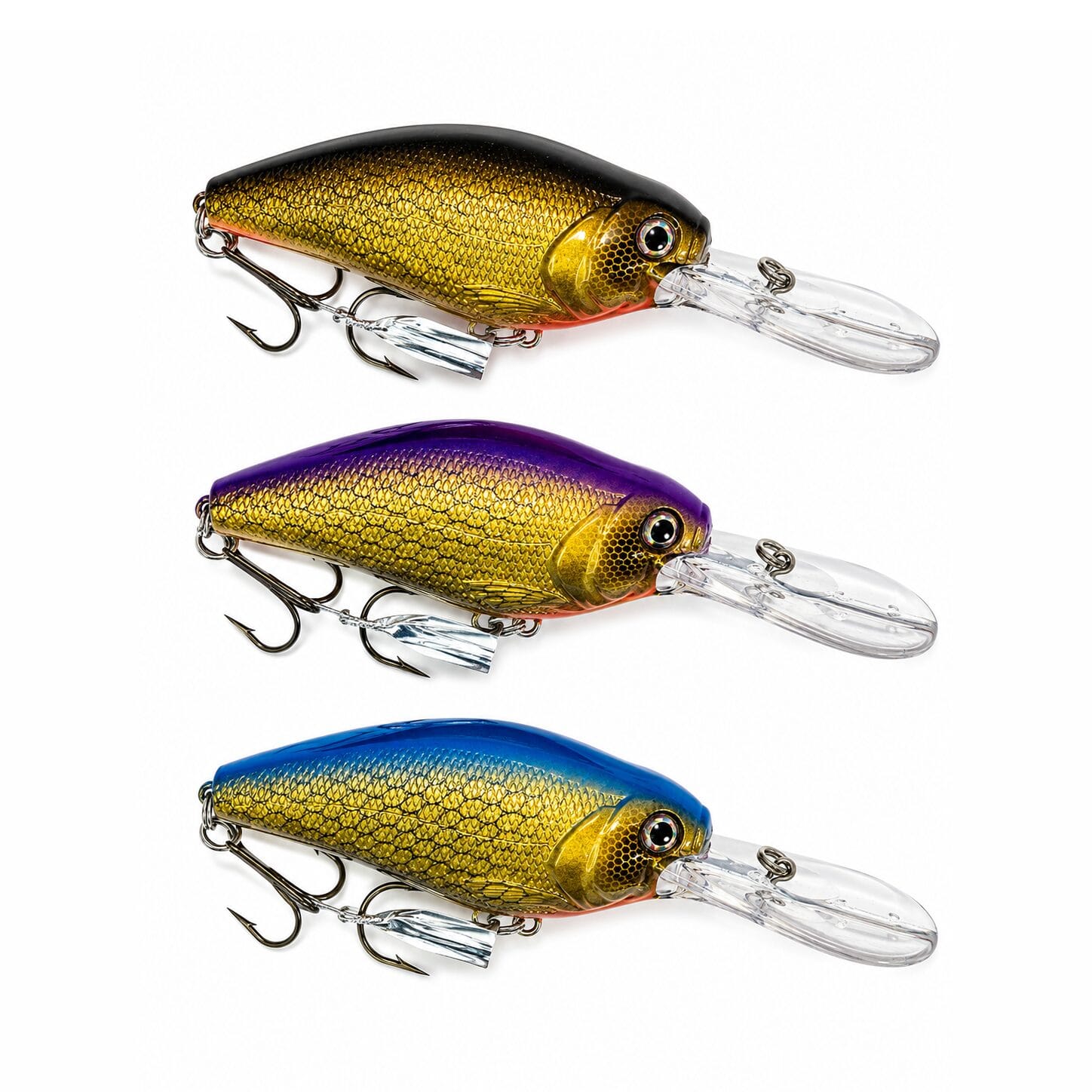
Summer Drop
The JKB LC 3DD drops May 15 in three limited colorways — Dr. Chovie, Bluechovie Buzzsaw, and Chovie Reaper. Gold body colorways. Some of Daniel’s biggest crankbait fish have come on gold. Limited run.