![[FISH]rx Logo in Black](https://fish-rx.com/wp-content/uploads/2025/07/FRXLOGO-BLK.png)
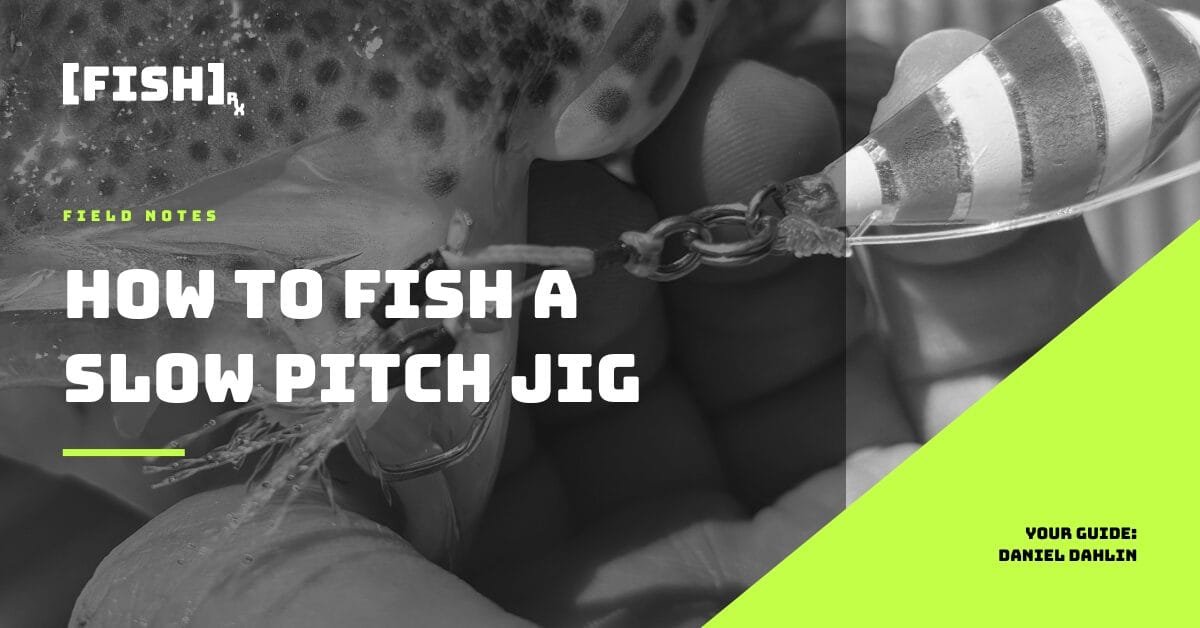
The slow pitch jig fills a gap in every SoCal inshore angler’s arsenal: a vertical presentation that covers water efficiently, gets down in current, and produces a flutter action on the drop that triggers fish when everything else has been rejected.
They’re also underrated as a late-session tool. When the bite slows and you’ve worked your finesse presentations through a section, picking up a slow pitch jig and combing the same pylons vertically often produces fish that had no interest in what came before. The action is different enough to trigger a response.
I’m throwing the 20g slow pitch jig right now with all these pylons. It’s a fun way to cover water. We got a lot of water to cover.
Rod and line setup
Spinning gear is the right call for slow pitch jigging. The reason is the fall. More than half the action happens on the drop, and a spinning reel releases line with less friction and tension than a baitcaster. Any tension at the rod tip as the jig falls orients it wrong and turns it into a weight rather than a slow pitch jig. If you’re fishing a baitcaster, dial your brakes all the way down to near-backlash territory. The goal is the same: maximum free fall, zero resistance.
Rod action matters for the same reason. You want something parabolic: a 1/8 to 3/4 oz rating works well. When you pop the rod up to work the jig and a fish loads it, that parabolic bend sets the hook rather than yanking the jig straight out of its mouth. Too stiff and you’ll pull it clean. A lighter spinning rod you already have will work. A dedicated slow pitch rod on a baitcaster is also a solid option if you have one. It loads up on the hookset and doubles well as a finesse rod for other moving baits.
Line is straightforward. Fluorocarbon is the right choice. It’s abrasion resistant around pylons and rocks, and gives you that small edge on getting an extra bite. 15 lb AFTCO fluorocarbon covers most harbor pylon fishing. You can go up to 20 lb if you want more pulling power on the hookset, especially when you know it’s a reactionary bite and you need to move the fish fast.
Working pylons and vertical structure
This is where the slow pitch jig earns its place in the SoCal harbor rotation. When you’re on a float tube or kayak alongside a pylon, dropping a slow pitch jig vertically and working it up through the column is one of the most efficient ways to find where fish are holding at any given depth. You cover the full water column from bottom to mid-depth in a few strokes instead of making multiple casts at different angles.
The technique: flip or pitch the jig onto a pylon, let it hit the sand, pop the rod tip up, drop it back down, and let it flutter. Two to three pops per pylon. If that doesn’t produce, move to the left side, then the right. Work each pylon with two to three casts at different angles before moving on. Open boat slips are worth hitting in each back corner as far as you can reach, then work it back. That’s not casting into open water. That’s fishing structure, just parallel along the dock rather than straight down.
The slow pitch jig is a search tool when you’re covering a pylon line, not a sit-and-wait presentation. I’m not looking to make a bass hungry. I’m looking for a hungry bass.
The slow pitch jig for late-session and night fishing
The slow pitch jig came up in the LA Harbors session producing a 15-inch spotty in the first few casts when everything else had been slower. That’s the slow pitch jig in its element. When bait is present and fish are suspending or sitting just below the thermocline, a slow pitch jig dropped into that zone flutters like a dying baitfish. It doesn’t need to be worked aggressively. Let it sink. Watch the line. The erratic fall does the work.
At night the slow pitch jig shines around lit structure: dock lights, fuel dock lights, any artificial light that concentrates bait and suspending bass in the upper water column. The flutter action in the light zone triggers reaction strikes from fish that are actively hunting rather than sitting tight to structure. Work it in the light cone, not in the dark water outside it.
Remember, you want the slow pitch jig to fall with no tension in the line. The action comes from the slow pitch jig having the ability to fall.
Weight selection
The Reaper 20g slow pitch jig covers most back bay pylon fishing from a float tube or kayak in moderate current. Go heavier, 30-40 grams, when current is running hard and you need to get the jig down efficiently without drifting too far off the structure. Going too light in current means the jig never reaches the strike zone before it’s swept off the spot.
For the slow pitch jig specifically, lighter weights flutter more dramatically on the drop. If the fish are in the upper water column and you want maximum erratic action, go lighter. If you’re trying to reach bottom and the current is working against you, go heavier and accept a tighter flutter profile.
For a deeper dive on technique and weight selection straight from the jig maker, Time on the Water Episode 120 with Connor Doyle of Reaper Slow Pitch Jigs is worth a listen.
When the slow pitch jig isn’t producing
The slow pitch jig isn’t a every-session producer. Some days it’s on fire, some days it isn’t. When it’s not working, the adjustment sequence is simple: go smaller or go bigger. Smaller gives the jig a couple of extra seconds in the water column on the fall and presents a more subtle profile. Bigger is shock and awe. These fish eat six, seven, and eight inch soft plastics, so a 40g metal jig isn’t outside their wheelhouse. Change colors before you give up on it entirely. If none of that produces, set it down and pick up something else. Some days it’s one rig catching one to two fish, then another rig catching one to two fish, and that’s how a full day of fishing adds up.
Key takeaways
- The slow pitch jig is most effective as a vertical search tool over pylon structure. Drop, stroke, fall, watch the line. The bite comes on the fall almost every time.
- The slow pitch jig earns its place late in a session when finesse presentations have been worked through an area and you want to trigger a fresh response with different action.
- At night around lit structure, the slow pitch jig flutter in the light cone is one of the most reliable presentations in the harbor for actively feeding bass.
Frequently asked questions
What weight slow pitch jig for SoCal harbor fishing?
The 20-gram range covers most back bay pylon fishing in moderate current from a float tube or kayak. Go up to 30-40 grams when current is running hard and you need to reach the bottom efficiently. The general rule: use the lightest weight that still gets you into the strike zone before the current pulls you off the spot.
Can you catch spotted bay bass on a slow pitch jig?
Spotted bay bass take slow pitch jigs readily around pylon structure in SoCal back bays. The vertical presentation and flutter action on the drop trigger reaction strikes from fish holding tight to vertical structure at any depth in the water column. The slow pitch jig is particularly effective from a float tube or kayak where you can position directly above the structure and work it straight down.
Is a slow pitch jig good for night fishing in SoCal harbors?
Around lit structure like dock lights and fuel dock lights, the slow pitch jig is one of the more reliable presentations in the harbor for actively feeding bass. The flutter action in the light cone triggers reaction strikes from fish that are hunting rather than sitting tight to structure. Work it in the light zone and let the fall do the work.
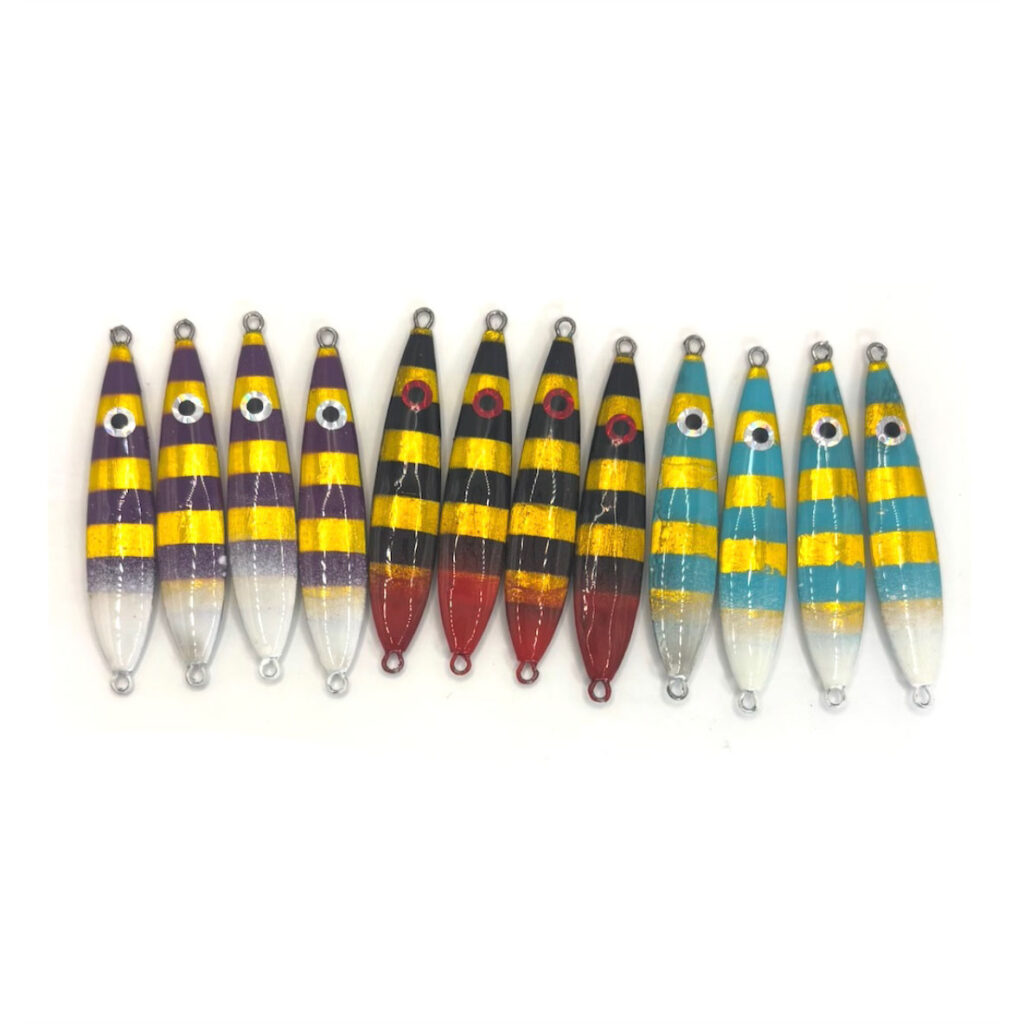
Limited Drop
The Reaper 20g slow pitch jig drops May 15 in three limited colorways — Dr. Chovie, Bluechovie Buzzsaw, and Chovie Reaper. Painted and foiled by Daniel. Limited run.