![[FISH]rx Logo in Black](https://fish-rx.com/wp-content/uploads/2025/07/FRXLOGO-BLK.png)
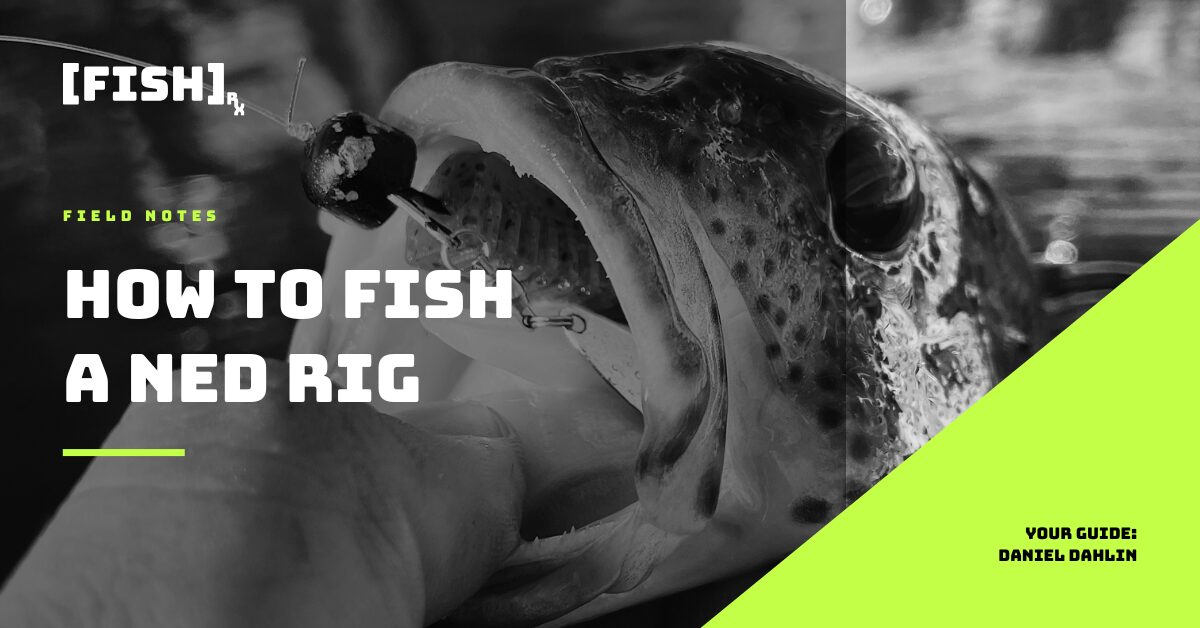
Ned rig SoCal bass fishing doesn’t get as much attention as the paddle tail and jig head, or drop shot. That’s exactly why it works when those don’t. You’re fishing the same structure, the same harbors, the same spotted bay bass. You’re just doing it slower than anyone else out there.
I reach for the Ned rig when the bite gets finicky. Fish are there, you can see them, you know the structure holds them, but they’re not reacting to anything moving. That’s when you slow down, get it on the bottom, and let it stand there. The bait does the work. Your job is to not rip it out of the strike zone.
What Is the Ned Rig Actually Doing, and When Does It Earn a Spot?
The Ned rig is a bottom contact presentation built around one idea: the 90-degree hook geometry holds the soft plastic upright off the bottom with no retrieve required. Current moves the trailer. The bait waves. That subtle, passive action is often exactly what spotted bay bass want when they’re hunkered down and not chasing.
Big fish don’t necessarily feed fast. They’re hunkered down and they eat stuff that is slow moving across their face. That’s the Ned rig’s whole purpose: put something small and natural-looking in front of a fish that’s sitting tight to structure and let it sit there long enough to be annoying.
That said, the Ned rig isn’t just a slow-day bailout. I’ve fished it fast: flipping and pitching pylons, covering dock structure quickly, working it as a vertical presentation next to a post. It’s not one speed. It’s a tool that fits more situations than most people give it credit for.
The honest part: the Ned rig snags. Exposed hook, bottom-hugging presentation, SoCal harbor structure, and you’re going to lose them. That’s the real reason it stays in the tackle box for most anglers. If you’re okay with re-tying occasionally, it can be the difference between catching nothing and catching fish on a tight day. After a while, you get good at working it back off the rocks without breaking off.
Firecracker Ned or Roll Head — Which Do You Reach For?
These are two different presentations that happen to both be slow. Don’t swap them based on feel. They’re doing different things in the water.
The RX Firecracker Ned is a true Ned rig: cast it, let it hit the bottom, pop it, pause, drag, pause again. Pause a lot. It hugs structure, keeps the hook pointing up off the bottom, and holds position in the strike zone while the skirt material and soft plastic wave in current.
The skirt the Firecracker Ned adds over a standard Ned head builds a slightly bigger profile and gives the bait more movement with less input from you. Cast it next to a dock piling and leave it there longer than feels comfortable.
The RX Roll Head is a jigging head. The hook exits from the bottom of the weight, making it top-heavy, which causes a side-to-side wobble on every jigging stroke. You bounce it on the rod tip, it lifts and rolls, and because of the off-balance design it hangs in the water column longer than a straight-up-and-down jig would. It’s fished just off the bottom on a slow retrieve, not a pop-and-pause. When you have a good vertical position directly above a pylon, you can almost hover it next to the structure with constant wobble.
One’s slow. The other one’s extra slow.
For pylon fishing from a kayak or float tube, I tend to reach for the Firecracker Ned when I’m covering water quickly: flipping fast, moving through a dock row. I’ll go to the Roll Head when I want to slow down completely on one spot and milk it.
Firecracker Ned weight — 1/4 oz vs. 3/8 oz:
Both get bit, and I use them interchangeably. The difference comes down to one thing: pendulum swing. When you flip a Ned rig next to a dock and your line is still coming off the reel, a lighter head will pendulum swing toward you instead of falling straight down. You’re now a foot or two away from the fish hiding under that dock instead of directly below where you aimed.
The 3/8 oz falls more vertically. It hits the water and drops straight down, right where the fish are. I tend to prefer it for that reason, especially for dock flipping. The 1/4 oz has a slower fall rate that can be the trigger (fish will eat it on the drop) but you’re trading some accuracy for that slower fall.
What Soft Plastic Goes On It, and How Do You Work the Retrieve?
The fish dictates the soft plastic, not a rule. The RX Spike, Slug, Dragon Tail, and Skeleton Craw all work on the Firecracker Ned. Start with whatever you have confidence in and adjust from there.
The RX Spike was designed for this head. The flat face sits flush against the Ned geometry for a clean, consistent look. It’s a natural pairing. But “ugly” presentations still catch fish. If the Slug is working, use the Slug. If you want a bigger profile, use the Skeleton Craw. “It can be just the difference of an inch.”
One setup worth trying: take an already-chewed Slug and cut a long incision down the back, then feather the tails apart. You get a long split-tail presentation that fishes almost like its own bait. It’s a great way to extend the life of a battered Slug, and the result (a big, slow-moving split tail waving off a Ned head) is a presentation most fish in your harbor haven’t seen. You can do this intentionally with a new Slug too. Check out the Slug rigging guide for more modification options.
The Skeleton Craw is a real option for spotties in the harbor, not just a breakwall or sand bass move. A lot of people flip pylons all day with a creature bait on a Ned head and have very productive sessions.
Retrieve around dock structure:
Get the cast as tight to the dock as possible. The fish hide underneath, not nearby. Set your reel drag loose enough that the bait falls vertically on entry. If the bait swings toward you on the drop, you’re missing the zone.
Once it’s on the bottom: keep tension between your rod tip and the bait and shake the line gently. This gives the bait action: the bait will shiver and the trailer will wave, without moving it out of the strike zone. You’re not hopping it out of the pocket. You’re keeping it in the pocket and making it look alive.
Pause. Wait. Fish will eat it without you doing much to it. How long between strokes? Pure feel. There’s no rule. Some people count to ten. Some people make a cast and forget about it for a while. Give it more time than feels right. For the mechanics of why you don’t rip the hook set on bottom-contact presentations, the hook set mechanics guide covers the muscle memory side of it.
Firecracker Ned colors:
Yellow GP, Orange GP, and Chartreuse GP are all crustacean-style presentations: natural green pumpkin base with a bright accent color. The idea is a presentation that looks natural from a distance but has enough flair to catch a fish’s eye up close. All three get bit. I don’t have a strict default.
Match the head color to the soft plastic loosely: greens, oranges, and yellows stay cohesive. Cricket (yellow/brown) pairs naturally with Yellow GP. Caramel Red pairs with Orange GP. Spottie Special fits Chartreuse GP. But you can go off-script and still catch fish.
Key takeaways
- The Ned rig produces when fish are hunkered down and won’t chase. It’s not a last resort, it’s an underused presentation that catches fish other setups miss.
- The Firecracker Ned and Roll Head are different tools: the Firecracker Ned is a bottom pop-and-pause; the Roll Head is a slow jigging retrieve with a wobble. Use the right one for the situation.
- You will snag and lose rigs. That’s the honest tradeoff. If you can accept the occasional re-tie, the Ned rig earns its spot in the rotation.
Frequently asked questions
When should I use a Ned rig instead of a drop shot for SoCal inshore bass?
Reach for the Ned rig when fish are tight to structure and not responding to a moving presentation. The drop shot suspends the bait in the water column; the Ned rig puts it on the bottom standing upright, where it stays in place and waves without any input from you. On days when spotties are hunkered down and ignoring anything that moves, that passive presentation is often the trigger. The drop shot is still the better search tool. The Ned rig is what you throw when you know the fish are there and you need to slow all the way down.
What’s the best soft plastic for a Ned rig for SoCal spotted bay bass?
The RX Spike is a natural pairing. The flat face sits flush on the Firecracker Ned head for a clean presentation, and the 3-inch profile matches what most harbor spotties want. The Slug works too, especially cut into a split-tail. The Skeleton Craw is a real option for spotties that need a slower, bulkier presentation. Let the fish tell you which profile they want that day. All of them produce.
What’s the difference between the RX Firecracker Ned and the RX Roll Head?
Two different slow presentations. The Firecracker Ned is a Ned rig: cast it, pop it once, let it sit on the bottom and wave. The 90-degree hook keeps the bait standing upright while the skirt and trailer wave in current. The Roll Head is a jigging head. It’s off-balance, so bouncing it on the rod tip causes a side-to-side wobble on every stroke. Fish it just off the bottom on a slow retrieve. Use the Firecracker Ned when you want the bait parked on the bottom. Use the Roll Head when you want constant wobble on a slow swim.
Why do I keep losing Ned rigs?
Exposed hook plus harbor structure means you’re going to lose rigs, especially from shore where you’re pulling the hook into structure rather than away from it. That frustration is why most SoCal anglers keep the Ned rig in the bag. Accept the re-ties, go heavier near rocks, and it becomes one of the most productive tools you own.
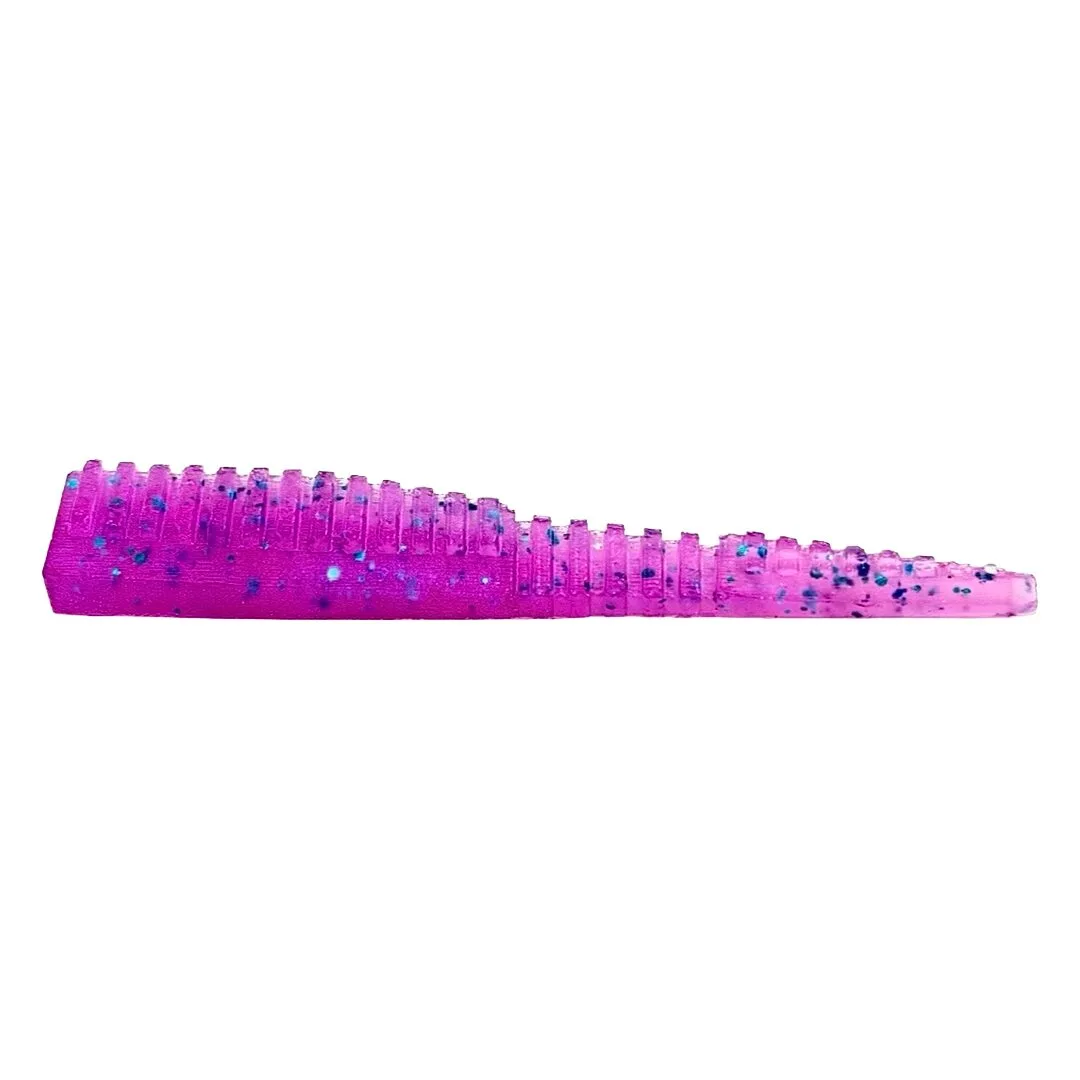
RX Firecracker Ned, RX Spike & RX Roll Head
The RX Firecracker Ned and RX Spike are the natural starting point. The Ned head stands the bait upright and lets current do the work; the Spike’s flat face keeps the rig looking clean and sitting flush. Pick up the RX Roll Head when you want that side-to-side wobble on a slow jigging retrieve instead.