![[FISH]rx Logo in Black](https://fish-rx.com/wp-content/uploads/2025/07/FRXLOGO-BLK.png)
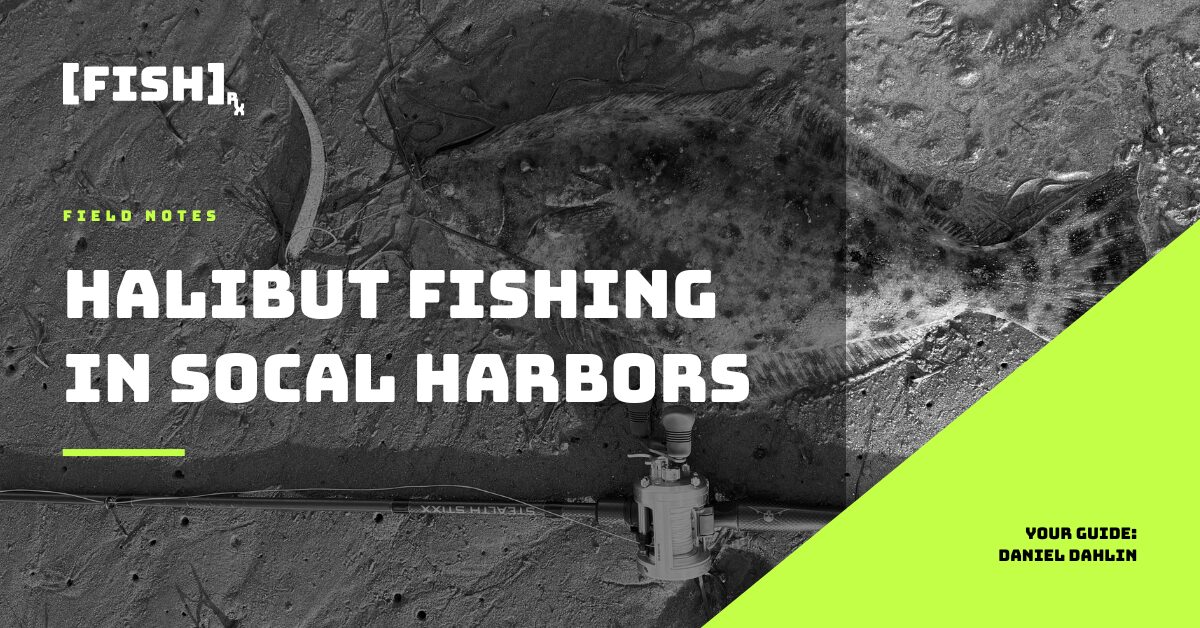
California halibut fishing in SoCal harbors doesn’t require a completely different program. You’re already fishing the right water if you’re targeting inshore bass — sandy bottom transitions, sandbars, the edge where structure meets sand. And the halibut are there too.
Most of the time when I hook one in the harbor, it’s a surprise. I’m fishing for spotties. Same rig, same presentation. The halibut just happens to be there. That’s actually the right way to think about them. You’re not switching programs. You’re adjusting where you fish, and more importantly, how you respond when something grabs the bait differently.
The part that trips most people up isn’t finding them. It’s the hook set. I’ve lost more halibut than I’ve landed in the harbor, and almost every one of them went the same way: I set the hook like I was fishing for a spotty, and I ripped the bait right out of its mouth.
Additional on-water perspective from Colton Lorenz (@crackincatch) and Joseph Leduff (@so_la_fishin). Header image courtesy of Colton Lorenz.
Where California Halibut Hold in SoCal Harbors
Halibut and spotties can share the same general water, but they’re not in the same exact spots. Here’s the difference: spotties hug structure. Pylons, dock edges, rocks, anything with a hard edge. Halibut are a little to the side of all that, on the sandy bottom nearby.
What you’re looking for is the transition. Where rocks meet sand, where a seawall or pylon row ends and there’s open sandy bottom, where a sandbar rises and falls on either side. Halibut sit on those sandy patches and wait. They’re camouflaged on the bottom and they let the bait come to them. They’re an ambush fish, but they’re not hiding in the rocks the way a spotty is.
That means you can absolutely catch halibut while fishing for spotties — plenty of people have. On the podcast, Lane Kilian talked about hooking halibut slow-rolling a spinner bait at 40 ft off a sandy incline. Nobody was targeting them. The bait was covering bottom and the halibut were there. Same story from the Day of the Sled tournament in San Diego, where an angler got wrecked by a halibut on a rat swimbait he was fishing near the surface. The fish came up and ate it. That’s the other thing people don’t expect: halibut are visual ambush predators, but they’ll also swim up off the bottom to chase baitfish when they’re feeding. They’re not pinned to the sand the way most people picture them.
Sandbars are worth targeting specifically. If you walk a beach at low tide and see small depressions in the sand, you’re looking at where halibut were sitting. Either side of a sandbar, where bait gets pushed through a channel, is an ambush location. Bait running along the edge of a structure wall uses that wall as a reference point, and halibut stage in the sand just off that edge to intercept it.
They can also just be on open sandy bottom with no structure nearby at all. Everywhere is an ambush point to them. But if you want to increase your odds, focus on those sand-to-structure edges and let your bait work the transition zone.
Why Does the Hook Set Matter So Much, and What Does the Right One Feel Like?
This is the part that takes adjustment if you’re coming from spottie fishing, and I’ll be honest about how I learned it: by blowing it.
The last halibut I lost to a bad hook set, I set it like I was Barry Bonds swinging for the fences. I ripped that bait clean out of its mouth. When the bait came back, it looked like someone ran it in a blender, shredded edges from the teeth. That’s what told me it was a halibut — spotties don’t do that, they puncture the bait. Instead, halibut shred it.
I set the hook like I was Barry Bonds swinging for the fences. I ripped that bait clean out of its mouth.
The problem is that halibut don’t eat a bait the way a spotty does. Typically, a spotty commits and you feel it. A halibut tends to crawl onto the bait, taking bites from the back and working forward. Sometimes a big enough halibut swallows the whole thing, but most of the time in a harbor you’re dealing with fish that are biting the rear of the bait and haven’t fully committed to the hook yet.
So when you set the hook hard, you’re often ripping the bait out of a mouth that doesn’t have a good grip on the hook yet. Or you’re pulling the hook through soft tissue. The issue is halibut have soft mouths.
The right approach is to wind down until you feel the weight of the fish, then apply steady, continuous pressure. You’re not setting — you’re loading. Instead, pull up slowly and keep winding. If you want to go deeper on hook set mechanics for SoCal inshore fish, that guide covers the muscle memory side of it. The adjustment for halibut is the same principle dialed back: consistent pressure, not a snap.
Because halibut don’t dive for structure the way spotties do, you can also loosen your drag a little. Let them run. When a halibut comes up to the surface, it peels off hard — if you have your drag pinned the way you would for a spottie iaroudn structure, that run breaks you off. Back the drag down, let the fish work, and bring it in on pressure rather than muscle.
The other rig adjustment worth knowing is the stinger hook setup. It’s a treble hook connected to the back shank of your main hook, sitting at the rear of the bait. Because halibut bite from the back and crawl forward, that rear treble hooks them before they’ve reached the main hook. Colton Lorenz (@crackincatch) recently landed a halibut on an 8-inch Slug specifically because he added a stinger hook on a swing head — the fish never touched the main hook, but the treble at the tail got it. On longer baits especially, this rig makes a lot of sense.
California Halibut Rigs: Does Your Setup Need to Change?
Not much different, honestly. The same presentations that catch spotties and sand bass will catch halibut. Drop shot, swim jig head, scrounger, underspin, swing head — I’ve caught halibut on all of them. The difference isn’t the rig, it’s where you’re putting it.
Move your casts away from the hard structure edge and toward the sandy bottom transition. That’s the single biggest location adjustment. You’re fishing the same water, just a few feet to the side of where you’d normally work for spotties.
Move your casts away from the hard structure edge and toward the sandy bottom transition. That’s the single biggest location adjustment.
For size, smaller baits increase your total number of bites across all species, but I’ve seen halibut eat a 2-inch white swimbait and an 8-inch Slug in the same week. The fish in the harbor are keyed in on bigger bait than you might expect — MDR in particular tends to hold bigger sardines, smelt, and jack smelt, and both the bass and the halibut are tuned to that profile. Fish the size that’s producing bites that day and adjust from there.
For the drop shot, keep the leader short and stay in contact with the bottom. Halibut are sitting on the sand, not suspended. The same setup you’d run for spotted bay bass along a dock edge — 4-inch or 6-inch Slug on a light head, bottom contact — puts you in the zone for halibut if you’re fishing the sandy transitions. For more on how to rig the Slug across different presentations, that guide covers every configuration.
For color, white and pearl are the consistent go-to. The working theory is that halibut sitting on the bottom and looking up see the white bellies of baitfish overhead, and that’s what they’re keyed to. There’s no hard science behind it, but it’s consistent enough across anglers to trust. Pearl Skeleton Craw and the pearl Slug cover this profile. That said, I’ve caught halibut on other colors. Still, white and pearl are a strong starting point, not a hard rule.
One thing worth knowing before you target them: California halibut and Pacific halibut are two different species with completely different regulations. The fish you’re targeting in SoCal harbors is California halibut — 22-inch minimum total length, 5-fish limit in waters south of Point Sur, open year-round. Pacific halibut is a northern California fishery with a 1-fish limit and a managed quota season. If you’re fishing a harbor in LA or San Diego, you’re fishing for California halibut.
Harbor halibut can realistically reach legal size, and a 22-inch fish has been in the water 3 to 5 years and weighs roughly 4 pounds. If you’re releasing short fish, wet your hands first, keep the fish horizontal, and get it back in the water without prolonged air exposure. Use a small mesh knotless net if you’re on a kayak or float tube — large mesh netting can split the tail fin.
Key takeaways
- Move your casts toward the sandy bottom transition, not the hard structure edge. Halibut hold just off the structure where sand meets rock — a few feet from where you’d normally work for spotties.
- Wind down, feel the weight, then apply steady pressure upward. Don’t rip the hook set. Halibut have soft mouths and bite from the back of the bait — a hard set tears the hook out before the fish has it.
- White and pearl are the go-to colors, but the rig matters more than the color. The same setup you’re already fishing for bass will catch halibut if you’re in the right spot and you ease up on the hook set.
Frequently asked questions
What’s the best soft plastic for halibut fishing in SoCal harbors?
The RX Slug in pearl on a light swing head or drop shot is a strong starting point. White and pearl consistently produce for halibut across SoCal harbors — the working theory is that halibut sitting on the bottom see the white bellies of baitfish overhead. Size matters less than location: get your bait on the sandy bottom transition where structure meets sand, and fish the same presentation you’d run for spotted bay bass.
Why do I keep losing halibut after hookup?
Most harbor halibut losses come from a hard hook set. Halibut crawl onto a bait from the back and have soft mouths — a rip set tears the hook free before the fish has it. Wind down until you feel the weight of the fish, then apply slow, steady pressure upward. Also loosen your drag. When halibut reach the surface they peel hard, and if your drag is pinned for spottie fishing in structure, that run breaks you off.
What’s the difference between California halibut and Pacific halibut?
Two completely different species with different regulations. California halibut is what you’re targeting in SoCal harbors — 22-inch minimum, 5-fish limit south of Point Sur, open year-round. Pacific halibut is a northern California fishery with a 1-fish limit and a managed quota season. If you’re fishing a harbor in LA or San Diego, you’re fishing for California halibut.
Do I need a different rig to target halibut in a harbor?
Not really. The same drop shot, swing head, scrounger, and underspin setups that catch spotties and sand bass will catch halibut. The adjustment is where you cast — toward sandy bottom transitions and sandbars instead of tight to structure. A stinger hook (treble hook connected to the back shank of your main hook) helps on longer baits because halibut bite from the rear and work forward, and the rear treble hooks them before they reach the main point.
From mid-March through late summer, anglers in the SoCal community consistently find halibut close to beaches and harbor mouths. That’s not a hard rule and conditions vary, but if you’re planning sessions specifically targeting halibut, that window is when most people are finding them. The harbor halibut bite can be inconsistent day to day regardless of conditions — some days you do everything right and nothing happens. That’s part of it.
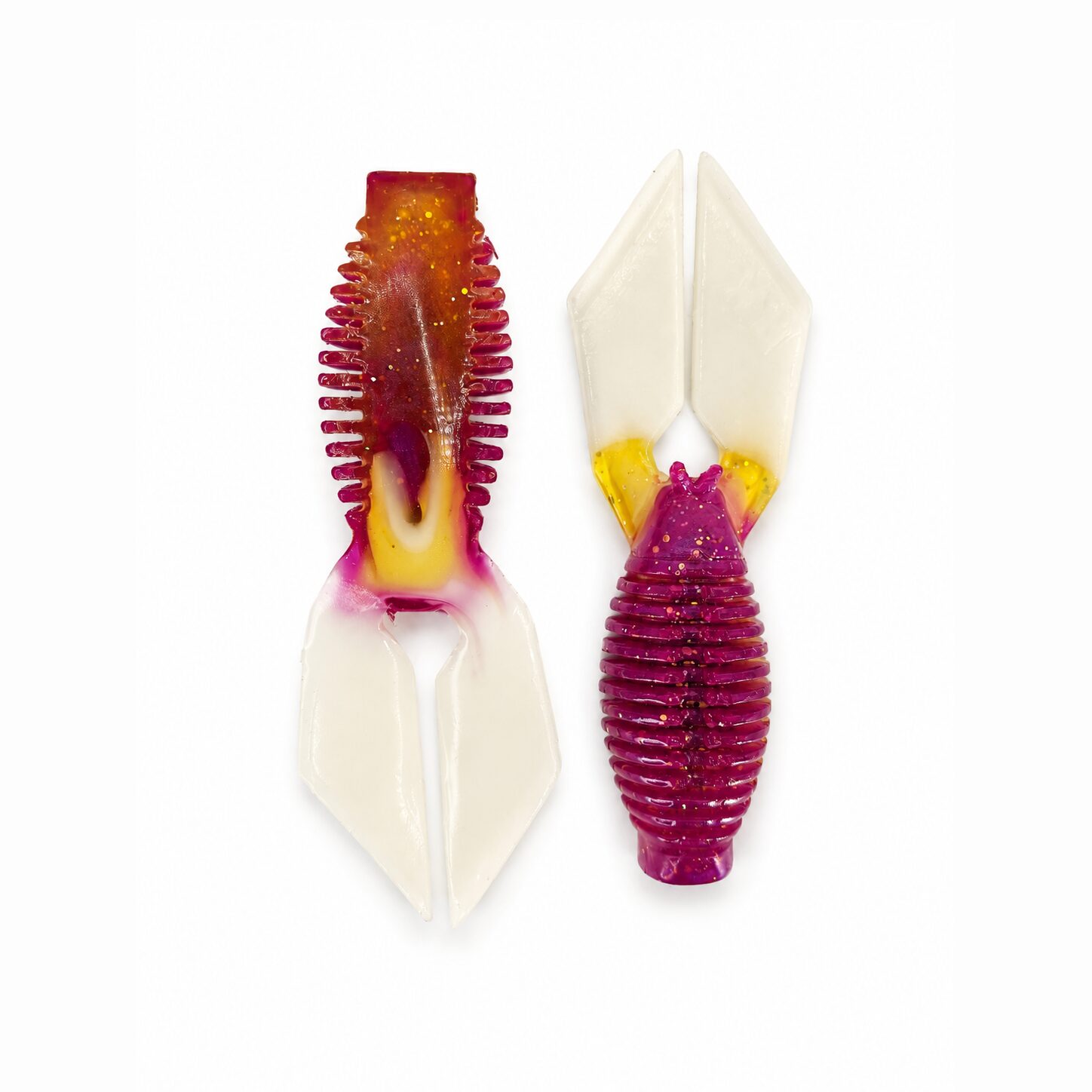
RX skeleton craw
The RX Slug and RX Skeleton Craw in Pearl are the setups I’d start with for harbor halibut. Both fish naturally on the sandy bottom transitions where halibut hold, and the pearl color covers the white belly profile that consistently produces. Run the Slug on a light swing head or drop shot for the sandy bottom, and work the Skeleton Craw Texas-rigged through any sandy-grass transitions where halibut ambush bait moving through the edge.